Cape Verde
When to go to Cape Verde: month by month, wind, sea temperature and the best island for each season
Warm and windy in winter, hot and sticky in early autumn. Here is when I would go to Cape Verde, month by month, and which island I would pick for each season.
Links to Booking.com on this page may earn us a commission, at no extra cost to you.
Cape Verde is a winter-sun trip that works a little differently from most. The islands sit far out in the Atlantic, so the weather is shaped by wind and sea rather than by rain: for much of the year it hardly rains at all, the trade winds keep the heat in check, and the sea changes by four or five degrees between February and October. That, more than anything, is what choosing a month is about.
I've kept every figure rounded, because the weather sites I checked disagree by a degree or so, and they're long-term averages, not forecasts. If you want the quick version, our Cape Verde guide has the essentials and a calendar. This is the slower, chattier companion to it.
The short answer
November to April is the best time to go. Our guide marks those six months as the best, with daytime highs in the mid-20s, a sea of about 22 to 24 degrees (warmer in November), very little rain and the trade winds at their steadiest. May to July is good and still dry. August and September are the quiet, cheaper months, but they're also the hottest, the stickiest and the wettest. If I had to pick one month for a first trip, I'd take February or March for dry, windy, sunny weather, or November if I wanted the warm sea left over from the summer.
Cape Verde month by month
These figures are for Sal and Boa Vista, the two beach islands most UK visitors fly to. The mountains of Santo Antão have a weather of their own, and I'll come back to them further down.
- November. The sea is still about 26 degrees, left over from the summer, and the rain has mostly gone. The trade winds start to come back, and the first of the winter dust haze can arrive late in the month.
- December to February. Daytime highs of about 24 to 25 degrees, nights of roughly 19 to 22, and around six hours of sunshine a day in January. The sea is about 24 degrees in December and 22 to 23 in January and February. Rain is close to nothing: January averages about 6 millimetres, on one wet day. The trade winds are strong and steady, and hazy skies are likeliest.
- March to May. The sea is at its coolest, about 22 degrees, and there is almost no rain. The wind is still reliable through April, and kitesurfing guides put the best of it between January and April.
- June and July. The sea warms up to 23 or 24 degrees and it stays dry. Our guide has the trade winds blowing until July. Around the end of June or in July, loggerhead turtles start nesting on Boa Vista.
- August. Mid to high 20s by day, humid, with a sea of about 26 degrees. Rain averages roughly 20 to 40 millimetres, depending on the island and the source. August is the peak of the turtle nesting season on Boa Vista.
- September and October. September is the hottest month, with highs of around 30 degrees, and also the wettest: about 58 millimetres in Espargos on Sal and about 67 in Sal Rei on Boa Vista, easing to around 26 in October. The sea is at its warmest, 26 to 27 degrees.
On crowds, our guide's calendar marks August and September as the quieter, cheaper months, and November to April as the best. That fits what I'd expect: the weather is the draw, and the weather is best in winter.
Cape Verde is a calendar of wind, not of rain. Choose the wind first and the sea temperature second.
Winter sun (November to March)
It's easy to see why Cape Verde suits UK travellers in the middle of winter. The flight is about six hours, it barely rains, and the days are warm. On weather2travel's long-term averages, January daytime highs are 25 degrees with about six hours of sunshine a day, and other sites say 24, so call it 24 to 25. That's a warm, easy day, not a hot one.
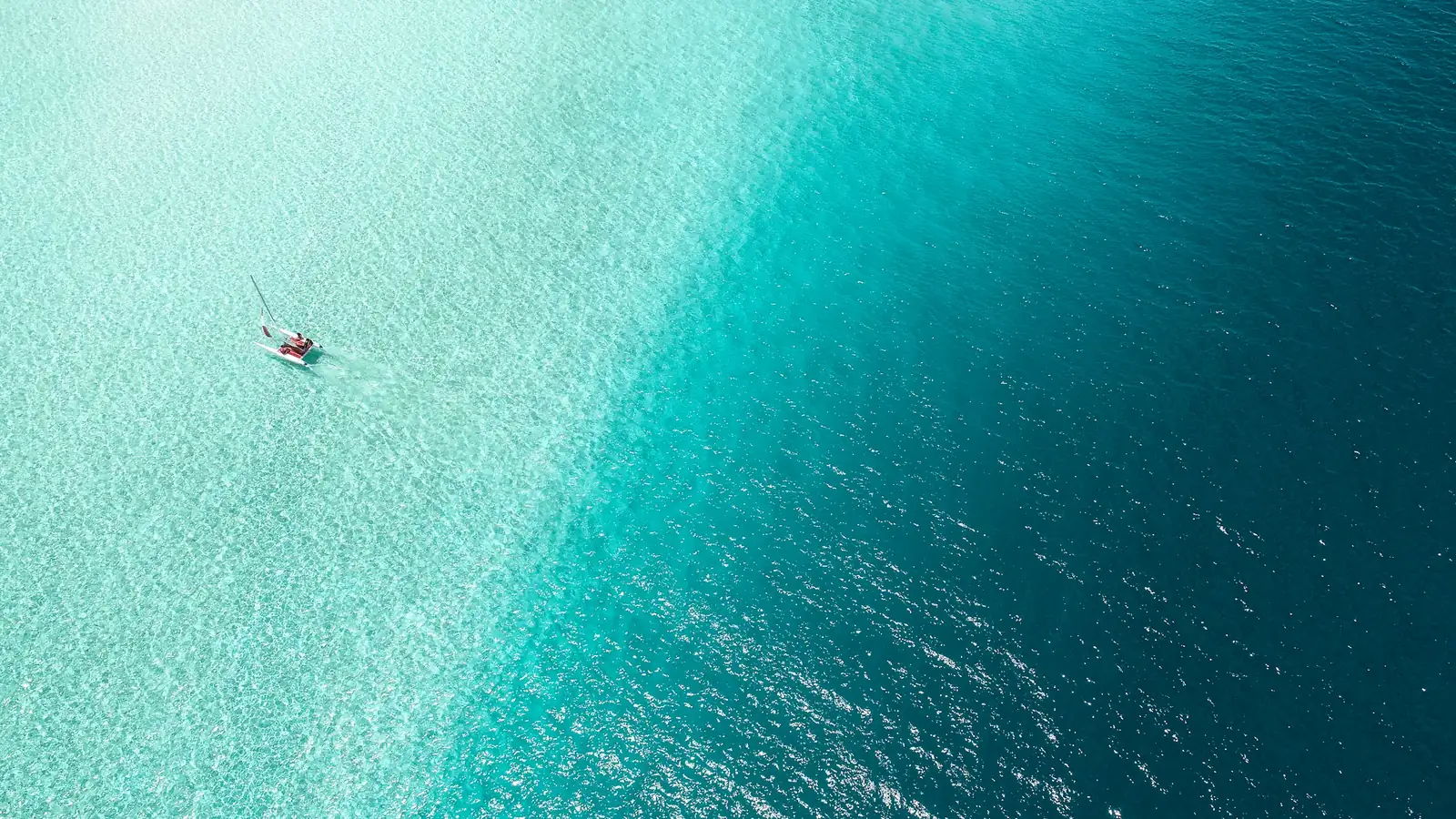
Be realistic about the sea. At about 22 to 24 degrees it's fine for a dip, but if you like long, lazy swims, February and March may feel fresh. The wind off the water can feel cool when you're wet, too. This is also the harmattan season, which NOAA dates from late November to mid-March, when dust blown in from the Sahara can leave the sky hazy.
If you want sun and space rather than heat, it's a good pick. Our winter-sun collection puts Cape Verde next to the other places I'd consider for January.
The wind
The north-east trade winds are what make Cape Verde what it is. Our guide says they blow on the flat islands from October to July, and kitesurfing guides put the most reliable stretch between January and April, with typical winter winds of 15 to 25 knots. That's brilliant if you kitesurf or windsurf, and it's why Sal and Boa Vista are known for it. It also keeps the heat bearable.
It's less kind to a family with small children and a plan for a calm, sheltered beach day. Kitesurfing guides also warn that the wind close to the shore can turn gusty around buildings and dunes. If you'd rather avoid the wind, August and September sit outside the trade-wind months in our guide, though you pay for that in heat and humidity.
The wind and the waves matter for swimming, too. GOV.UK warns that currents around the islands can be very strong and the waves unpredictable, with a strong undertow, and advises using beaches with a lifeguard on duty. Check the flag before you go in: red means danger.
The rainy season (August to October)
"Rainy season" oversells it. Most sources place it between August and October, with September the wettest, and describe it as short and light. On weather2travel's long-term averages, September brings about 58 millimetres in Espargos on Sal and about 67 in Sal Rei on Boa Vista, with around 38 in August and 26 in October on Boa Vista. January, for comparison, is about 6 millimetres in Santa Maria. The showers are described as short and sharp rather than all-day.
The heat and humidity are the bigger issue. September is the hottest month, with highs of around 30 degrees, and humidity is rated high from August to October. The upside is a sea of 26 to 27 degrees, quiet beaches and lower prices in our guide's calendar. If you love heat, warm water and empty sand and don't mind sticky afternoons, it can work. It's also turtle season on Boa Vista, roughly July to October, with August the peak. If you want dry and breezy, it's the wrong time.
Which island when
The islands are small but far apart, and our guide notes that Sal to Boa Vista takes around three hours by ferry, so I'd pick one base and stick to it unless you have a week or more.
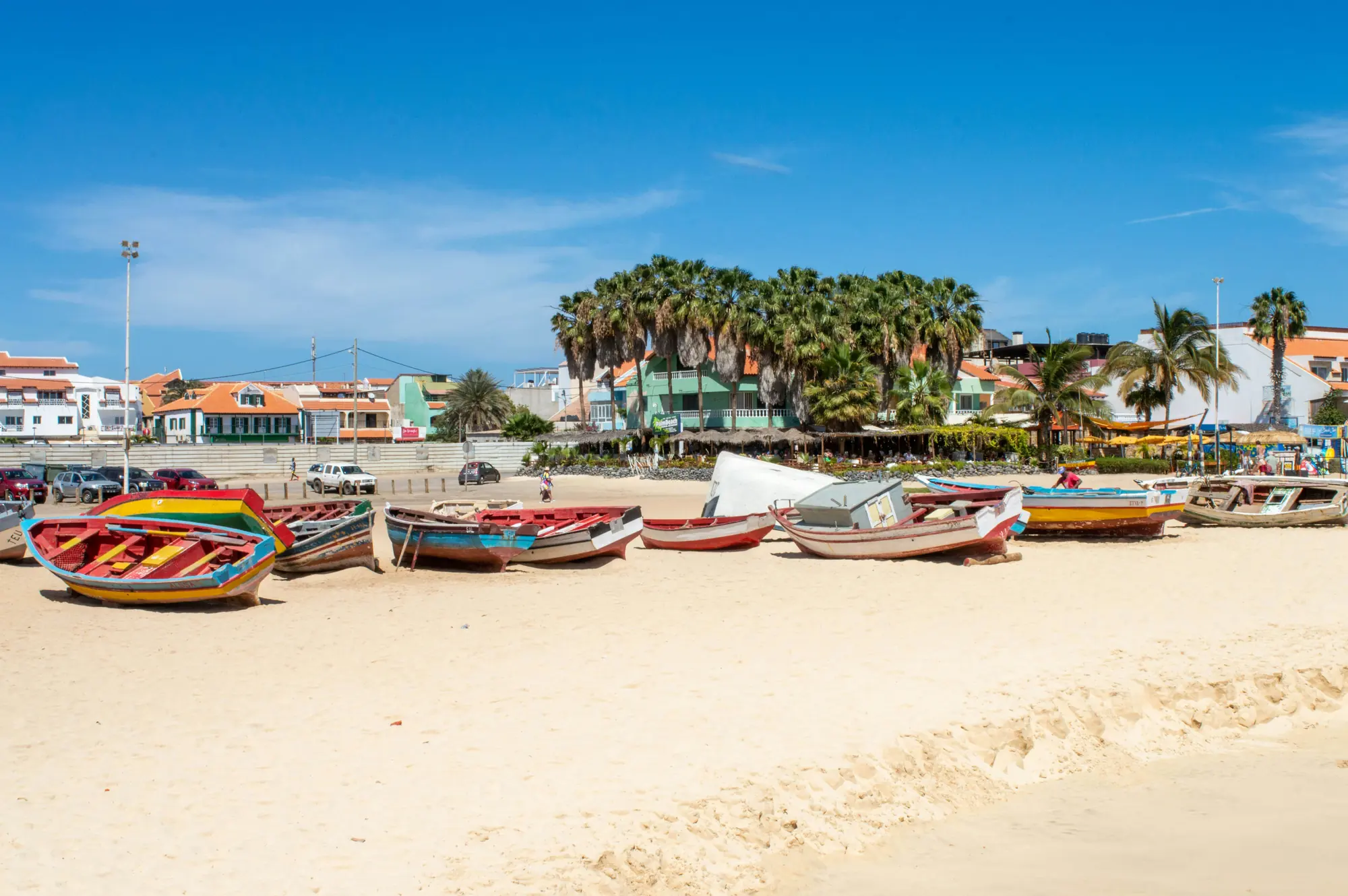
Sal is the tourist centre, with the former fishing village of Santa Maria and about 4 kilometres of white sand. It suits families, swimmers and water-sports fans, and kitesurfing guides say it has the better kite infrastructure of the two beach islands. I'd choose it for winter, when the wind is up and you want things close at hand. See places to stay in Santa Maria, Sal.
Boa Vista is quieter and wilder, with 55 kilometres of beaches in total, and Santa Monica singled out as especially beautiful. It suits couples who want long, empty beaches, and I'd choose it in summer for the turtles or in winter for long walks with the wind behind you. See places to stay in Sal Rei, Boa Vista or see places to stay in Santa Monica.
Santo Antão is the hiking island, with rugged mountains and green valleys, and the Paúl valley and the village of Fontainhas as highlights. The dry season, roughly November to June, is the best time for walking, with December to April the most often recommended, and I'd avoid August to October, when the rain is likeliest. There's no domestic flight there, only the ferry from São Vicente, which takes about an hour. See places to stay in Santo Antão.
Is Cape Verde a good holiday destination?
Yes, if you want reliable sun, long beaches and wind or water sports, and you don't need much green. Sal and Boa Vista are flat, dry islands: Climates to Travel describes Sal as arid tropical, and Santa Maria is described as semi-desert. It's a good fit for couples and kitesurfers, for anyone who wants winter warmth on a six-hour flight, and for walkers who add Santo Antão.
It suits you less if you want lush scenery from your beach hotel, a flat calm sea for long swims, or a lot to do beyond beaches and excursions. Inter-island travel takes planning, too.
On entry, GOV.UK says UK visitors can enter without a visa for up to 30 days, with a passport valid for at least six months. You also need to complete the traveller entry form and pay the airport security fee online before you fly. Rules change, so check the live page before you book.
FAQ
Is November a good time to go to Cape Verde?
Yes. Our guide marks it as one of the best months. The sea is still about 26 degrees from the summer, the rain has mostly gone and the trade winds start to return. Expect the odd hazy day as the dust season begins.
Is March a good time to go to Cape Verde?
Yes, it's one of the best. It's dry, sunny and windy, and the sea is at its coolest at about 22 degrees. Kitesurfing guides put the best of the wind between January and April.
When is the cheapest time to go to Cape Verde?
Our guide marks August and September as the quieter, cheaper months. They're also the hottest, the most humid and the wettest, so you pay in comfort. Prices move with your dates and your departure airport, so compare a few before you choose.
How long is the flight from the UK to Cape Verde?
About six hours on a direct flight to Sal or Boa Vista. Timings differ a little by airport and airline, so check yours.
Pick your month
If you only do one thing after reading this, pick your month and look at places to stay now. See places to stay in Cape Verde.
Planning this trip? Read our Cape Verde guide for the full picture.
Links to Booking.com on this page may earn us a commission, at no extra cost to you.