
Belgrade
A lively capital where two rivers meet, with fortress views, café-lined streets and late-night river life, about two and a half hours' flight from London.
- Flight from London
- Around 2 hours 30 minutes
- Ideal stay
- 3 nights
- Currency
- Serbian dinar (RSD)
- Best for
- History, nightlife, river life
Why go
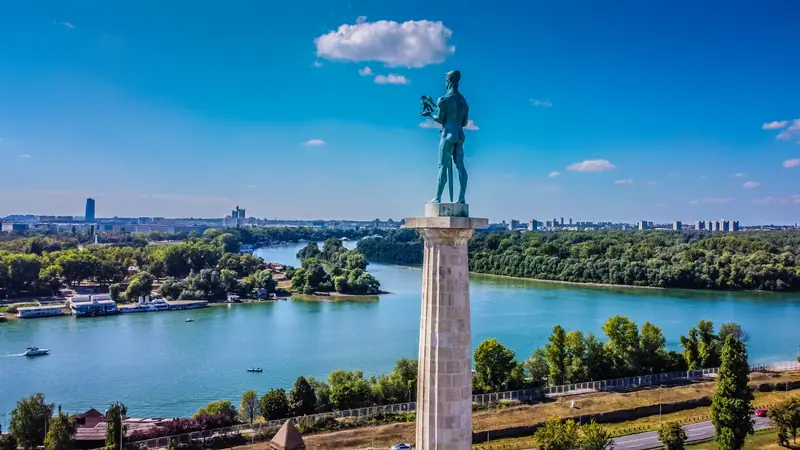
Belgrade sits where the Sava meets the Danube, and the fortress of Kalemegdan stands above the confluence. The city is energetic, informal and a little rough around the edges, with grand 19th-century buildings and Yugoslav-era concrete side by side. Walk its streets and you will see layers of history: Ottoman, Habsburg, interwar and socialist.
It is known for its social life: floating river clubs (splavovi) on the Sava and the Danube, cafés that stay busy well into the night, and a food scene built on grills and bakeries. Come for the atmosphere as much as the sights.
When to go
Late spring and early autumn are the best times, with warm, dry days and long evenings. Summers are hot, and the river clubs are at their liveliest. Winters are cold and grey, with occasional snow, but the cafés and museums stay cosy. Weekends are busiest, especially in summer, so book popular restaurants in advance.
Where to stay
The old town is compact, and the main districts are well connected. Choose by the kind of trip you're after.
Links in this section go to Booking.com. We may earn a commission, at no extra cost to you.
Stari Grad (the Old Town)
Best for first-timersThe pedestrian street Knez Mihailova links Republic Square with the Kalemegdan fortress, with shops, cafés and the main sights close by.
Suits a short first visit when you want to walk everywhere. It is central and lively, but also the most touristy part of the city. Rooms are smaller and pricier than in outlying districts.
See places to stay in Stari GradDorćol
Best for a local feelA district of leafy streets, cafés and bars between the old town and the Danube, with a relaxed, local atmosphere.
Suits couples and longer stays. It is a short walk to the fortress and the river.
See places to stay in DorćolSavamala
Best for nightlifeThe creative quarter beside the Sava, with galleries, bars and clubs, close to the Belgrade Waterfront development.
Suits groups and night owls. Weekend evenings are loud, so light sleepers should look elsewhere.
See places to stay in SavamalaVračar
Best for calm and local foodA residential district south of the centre, home to the Church of Saint Sava, with leafy streets, bakeries and local restaurants.
Suits travellers who prefer quieter evenings. Trams and buses link it with the centre.
See places to stay in VračarTop things to do
Belgrade's main sights are concentrated around the old town and the rivers. These are the ones worth planning your days around.
Kalemegdan Fortress
SunsetThe fortress and its park sit above the confluence of the Sava and the Danube, with walls, towers and wide views. It is easy to spend a couple of hours wandering the grounds. Bring water in summer, as shade is limited in parts of the park.
Knez Mihailova and Republic Square
StrollA pedestrian street of shops and cafés that leads down from the fortress to Republic Square, the traditional meeting point in the centre. Cafés along the way make a good place to pause.
Skadarlija
Evening mealA cobbled bohemian quarter of traditional restaurants (kafanas) and live music, a short walk from Republic Square. Book ahead at weekends, when the tables fill up.
The Church of Saint Sava
LandmarkOne of the largest Orthodox churches in the world, with a huge white dome that dominates the skyline of the district. Go inside if you can, to see the large interior.
The Nikola Tesla Museum
Book aheadDedicated to the inventor Nikola Tesla, with live demonstrations of his experiments. Visits are by guided tour, so check times and book ahead.
Zemun
By the DanubeA former separate town on the Danube, now part of the city, with a cobbled old centre, the Gardoš Tower and fish restaurants by the river. Walk along the river path and watch the boats go by.
Travel essentials
Getting around
The old town is compact and walkable, and trams, trolleybuses and buses link the wider city. Entry rules vary by nationality, so check the requirements for your passport before you travel. Walking between neighbouring districts is often as quick as waiting for a tram.
From the airport
Belgrade Nikola Tesla Airport is about 18 km west of the centre. City buses 72, 600 and 607 run from the airport and are free, like the rest of the city network. The A1 minibus to Slavija Square is a separate commercial line, paid on board in cash (dinars). Taxis are also available; use an official taxi or a ride-hailing app, and ask for the meter.
Public transport
Belgrade's city buses, trams and trolleybuses have been free for all passengers since 1 January 2025, so there is no ticket to buy. Services can be crowded at rush hour, so allow extra time and check your route on a map app.
By the river
Paths along the Sava and the Danube are good for walking and cycling, and the riverside cafés are a pleasant place to rest between sights.
How many days do you need?
Three nights lets you see the fortress, the old town and Skadarlija, with an evening on the river and a half day in Zemun. Leave time for a long café stop: the city's cafés are as much a part of Belgrade life as its landmarks.
With a fourth day, visit Novi Sad, on the Danube, about 90 km from Belgrade, with its hilltop fortress and lively old centre.
Budget tips
Belgrade is good value by Western European standards, and a few habits help. Check the bill, as some tourist restaurants add a service charge.
Carry some cash
Cards are accepted in most restaurants and hotels, but smaller cafés and market stalls prefer cash in dinars. Use bank ATMs and decline any offer to be charged in your home currency.
Eat like a local
Bakeries and grills are cheap and filling, and lunch menus are usually less expensive than dinner. Try a burek or a grilled plate of ćevapi.
Tipping
A tip of around 10% is customary in restaurants, and rounding up the bill in cafés is fine.
Belgrade FAQ
How many days do you need in Belgrade?
Three nights covers the fortress, the old town and an evening on the river at a relaxed pace. Add a fourth day for Novi Sad.
Does Belgrade use the euro?
No. Serbia uses the Serbian dinar (RSD). Cards are accepted in larger places, but keep some dinars for cafés and market stalls.
How do I get from Belgrade airport to the city centre?
The airport is about 18 km from the centre. City buses 72, 600 and 607 are free, and the A1 minibus to Slavija Square is paid on board in cash (dinars). Taxis are also available; ask for the meter.
Is Belgrade walkable?
Yes, the old town and the river paths are walkable, though the city is spread out. Trams, buses and taxis help for longer distances.
When is the best time to visit Belgrade?
May, June and September bring warm weather and long evenings. Summers are hot and winters are cold.
Comments and tips
Been there, or planning a trip? Share a tip, ask a question or add a photo. Every comment is read before it appears.
No comments yet. Be the first to share a tip.
Comments are not open just yet. Please check back soon.
Ready for Belgrade?
Compare hotels, apartments and guesthouses across the city and lock in your dates.
See places to stay in BelgradeWe may earn a commission if you book, at no extra cost to you.