
Peak District
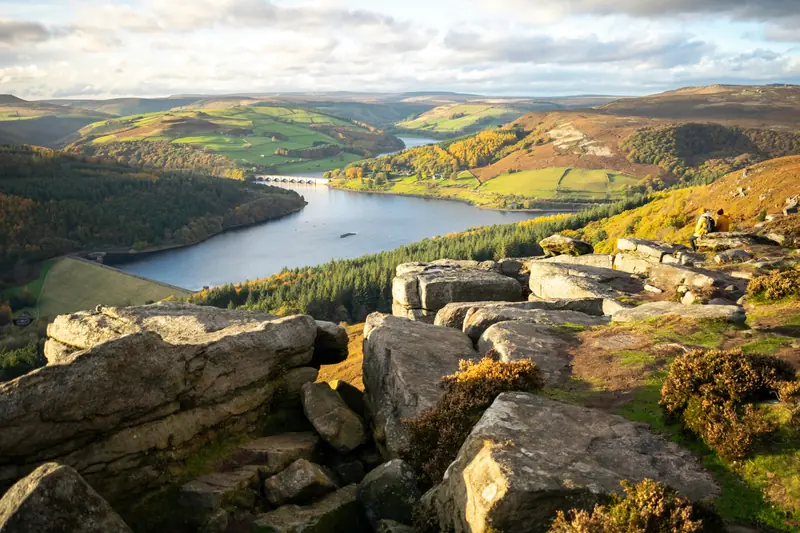
Gritstone edges, green dales and market towns, in the UK's first national park, within reach of Sheffield, Manchester and the Midlands.
- Train from London
- Around 2 hours to Sheffield
- Ideal stay
- 3 nights
- Don't miss
- The Great Ridge walk
- Best for
- Walks, caves, market towns
Why go
The Peak District packs a lot into a small space. It was the first national park in the UK, created in 1951, and it still feels like one: high moorland, deep limestone dales, reservoirs and stone villages, all within a short drive of one another.
It suits every kind of weekend. You can tackle a ridge walk along an edge in the morning, explore a show cave at Castleton in the afternoon and finish with a pint in a village pub. Bakewell puddings, stately houses and cycle trails along old railway lines add plenty for rainy days, and the towns make good bases for bad weather.
When to go
Late spring and early autumn are ideal, with long days and good walking weather. Summer weekends bring crowds to the best-known viewpoints. The heather blooms on the moors in late summer, and autumn brings colour in the woods. Winter is beautiful but weather can close roads, so check conditions.
Where to stay
The Peak District is large, so the base you pick shapes your trip. These four are good starting points.
Links in this section go to Booking.com. We may earn a commission, at no extra cost to you.
Bakewell
Best for a market townA stone market town on the River Wye, with shops, tea rooms and the pudding that bears its name, close to Chatsworth House.
Suits first-time visitors and couples who like a town with plenty to eat and see within walking distance. It is busy on summer weekends.
See places to stay in BakewellCastleton
Best for caves and hillsA village at the head of the Hope Valley, with ruined Peveril Castle, show caves and the hill of Mam Tor close by.
Suits walkers and families who want caves, castle and ridge walks on the doorstep. Parking is limited, so arrive early.
See places to stay in CastletonHathersage
Best for walkersA friendly village in the Hope Valley, on the Sheffield to Manchester railway line, with an outdoor swimming pool, outdoor shops and paths up to Stanage Edge.
Suits walkers, climbers and visitors travelling by train. It is a convenient base without a car.
See places to stay in HathersageBuxton
Best for a spa townA Georgian spa town at the western edge of the park, with the Crescent, the Pavilion Gardens and an opera house, and walks into Goyt Valley.
Suits visitors who want a town with architecture, theatre and restaurants, with the moors a short distance away.
See places to stay in BuxtonTop things to do
The park has dozens of places worth a day, so it helps to pick a few and leave the rest for another trip.
Edale and Kinder Scout
Hill walkingEdale is the start of the Pennine Way, and Kinder Scout rises above it. The 1932 mass trespass on Kinder Scout helped win the public right to roam. The plateau is wild, so take a map, boots and waterproofs.
Mam Tor and Castleton
Views and cavesWalk the ridge from Mam Tor towards Lose Hill for wide views over the Hope Valley, then go underground in one of the show caves at Castleton. At 517 metres, Mam Tor is known as the Shivering Mountain because of its landslips on unstable shale. The caves include Speedwell, an old lead mine where a boat takes you along a flooded tunnel, and Treak Cliff and Blue John, where the rare Blue John stone is found. Check opening times for the caves.
Chatsworth House
Stately homeA grand house and garden near Bakewell, home to the Dukes of Devonshire. Check opening times, as the house, garden and other attractions may open on different days.
Stanage Edge
Gritstone viewsA long gritstone escarpment above Hathersage, popular with climbers and walkers. The edge is exposed, so check the weather and keep clear of drops.
Dovedale
A limestone daleA steep-sided limestone valley with stepping stones across the River Dove, in the southern part of the park. The path can be busy on summer weekends and slippery when wet, so wear shoes with good grip.
Monsal Trail
Walking and cyclingA traffic-free trail of 8.5 miles along a former Midland Railway line, from Blackwell Mill near Buxton to Bakewell, suitable for walkers and cyclists of most abilities. It passes through six tunnels, the longest about 400 metres and lit during daylight hours, and across Headstone Viaduct in Monsal Dale. Check any closures before you go.
Travel essentials
Getting around
A car is the easiest way to see the whole park, but the main routes are well served by trains and buses, and many bases suit walking without one.
By train
The Hope Valley line between Sheffield and Manchester stops at Edale, Hope and Hathersage, among others, putting you straight into the hills. Check timetables, as trains can be infrequent at weekends and in the evening.
By bus
Buses link the main towns, including Bakewell, Buxton and Castleton, but are less frequent to small villages. Check timetables and last services before you plan a walk one way.
By car
Roads on the moors can be narrow, winding and affected by weather. Popular car parks fill up early on fine weekends, so arrive early or choose a village base and walk.
How many days do you need?
Three nights lets you do a hill walk, a cave or stately home and a market-town day. Two nights covers one or two of those well, if you keep to one area.
Stay four nights to add Dovedale, the Monsal Trail or a day in Buxton.
Budget tips
The Peak District is one of the cheaper ways to take a proper break, since most of its best sights cost nothing.
Enjoy the free sights
The paths, the edges, the dales and the trails are free. Buy a good map and plan a route, rather than paying for entry to every attraction.
Travel midweek
Prices are lower and the paths quieter midweek and outside the school holidays.
Share a car
A car shared between several people is often cheaper than separate train fares, and gives you access to out-of-the-way villages.
Peak District FAQ
How many days do you need in the Peak District?
Three nights gives you a hill walk, an attraction and a market-town day. Two nights suits a short break in one area.
Can you visit the Peak District without a car?
Yes. Trains on the Hope Valley line serve Edale, Hope and Hathersage, and buses link the main towns, though services are limited in places.
What is Kinder Scout?
It is the high moorland plateau above Edale, the highest point in the Peak District, and the site of the 1932 mass trespass.
Why is Mam Tor called the Shivering Mountain?
Because its lower slopes are unstable shale that keeps slipping in landslips. Mam Tor is 517 metres high and rises above Castleton.
Is the Peak District good for families?
Yes. There are gentle trails, show caves, a castle and open fields, plus easier routes such as the Monsal Trail. Check the weather before heading up onto the moors with children.
When is the best time to visit the Peak District?
May, June, September and October bring the best balance of weather and quiet. Summer weekends are busy and winter walking needs preparation.
Comments and tips
Been there, or planning a trip? Share a tip, ask a question or add a photo. Every comment is read before it appears.
No comments yet. Be the first to share a tip.
Comments are not open just yet. Please check back soon.
Ready for the Peak District?
Compare hotels, guesthouses and cottages across the Peak District and lock in your dates.
See places to stay in the Peak DistrictWe may earn a commission if you book, at no extra cost to you.