
Paris
Grand boulevards, world-famous museums and café terraces along the Seine, about an hour and a quarter's flight from London.
- Flight from London
- Around 1 hour 15 minutes
- Ideal stay
- 3 nights
- Currency
- Euro (EUR)
- Best for
- Art, food, walking
Why go
Paris rewards a first visit and a fifth. The banks of the Seine are a UNESCO World Heritage Site, and a single afternoon's walk along the river can pass Notre-Dame, the Louvre and the Eiffel Tower. The compact centre makes it easy to see a lot without a car.
The city is divided into 20 arrondissements that spiral outwards from the centre, which makes it easier to navigate than it first appears. Between the big sights, leave time for the things Paris does best: markets, bakeries, long lunches and quiet squares. Pace yourself: two or three big sights a day is plenty.
When to go
Spring and early autumn are the best times, with mild weather and café terraces in full swing. July and August are warm and busy, and some smaller shops and restaurants close for the summer holidays. December brings Christmas lights and markets, but it is cold. Early mornings and evenings are the best times for the busiest landmarks.
Where to stay
Most of what you'll want to see sits within a short metro ride of these four areas. Choose by the kind of trip you're after.
Links in this section go to Booking.com. We may earn a commission, at no extra cost to you.
Le Marais
Best for first-timersMedieval lanes, boutique shops, the Place des Vosges and the Picasso Museum, with a lively café and bar scene.
Suits a short first visit, with the Centre Pompidou and Notre-Dame within walking distance. Rooms are small and pricey. Many shops here open on Sundays, unlike in much of the city.
See places to stay in Le MaraisSaint-Germain and the Latin Quarter
Best for classic ParisOn the Left Bank, with the Luxembourg Gardens, the Sorbonne, bookshops and the Panthéon within reach.
Suits couples and culture lovers. It is central and walkable, with plenty of cafés and restaurants.
See places to stay in Saint-GermainMontmartre
Best for a village feelA hilltop district of steep streets and artists' squares, crowned by the Sacré-Cœur basilica.
Suits romantic breaks and anyone who likes atmosphere. The hills are steep, and the area around the basilica gets crowded.
See places to stay in MontmartreCanal Saint-Martin
Best for Eurostar arrivalsA laid-back area of cafés and iron footbridges beside the Canal Saint-Martin, close to the Gare du Nord, where Eurostar trains arrive.
Suits travellers arriving by train and those who want a local feel. Streets right around the station are busy, so choose nearer the canal.
See places to stay near Canal Saint-MartinTop things to do
Paris has more sights than you can fit into one trip. These are the ones worth planning your days around. Group them by area to save time on the metro.
The Eiffel Tower
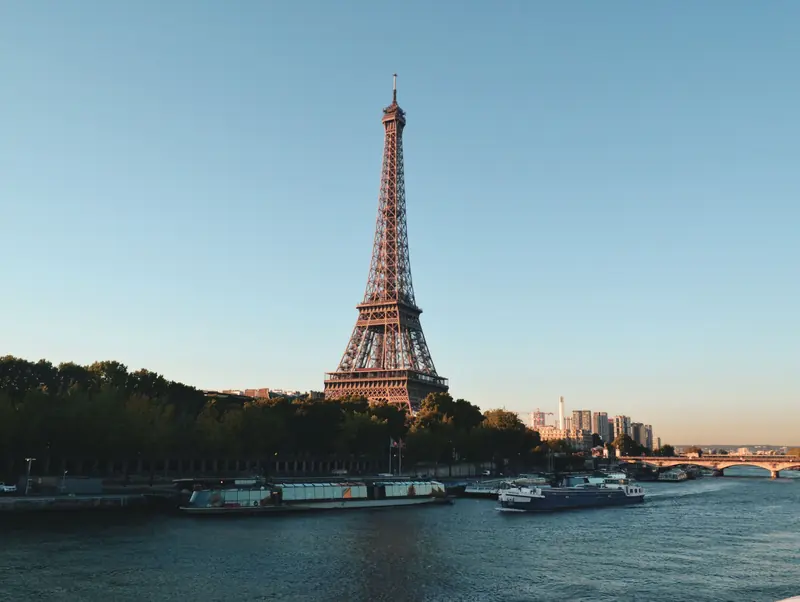
Book onlineBuilt for the 1889 World's Fair, it remains the city's best-known landmark. It stood 312 metres tall when it opened and now reaches 330 metres with its antennas. You can climb 674 steps to the second floor, but the summit is reached only by lift. Tickets for the summit and the stairs sell out, so book ahead online.
The Louvre
Reserve a time slotA former royal palace and one of the largest museums in the world, home to the Mona Lisa. Entry is by timed reservation, so choose a few highlights rather than trying to see everything.
The Musée d'Orsay
ImpressionistsHoused in a former railway station built for the 1900 Universal Exhibition, it opened as a museum in 1986 and holds a major collection of Impressionist and post-Impressionist art. The great clock window is worth a look.
Notre-Dame and Sainte-Chapelle
Île de la CitéNotre-Dame was damaged by fire in 2019. It reopened in December 2024 after a five-year restoration. Entry is free and a reservation is optional but recommended. Check the current visiting arrangements before you go. Nearby, the Sainte-Chapelle was built for Louis IX in the 13th century to house the Crown of Thorns, and its upper chapel has 15 tall stained-glass windows.
Montmartre and Sacré-Cœur
ViewsClimb to the basilica for a wide view across the city from one of the highest points in Paris, then wander the lanes behind it.
The Seine and the Luxembourg Gardens
FreeWalk the riverbanks past the bouquinistes, the green booksellers' stalls, and rest in the Luxembourg Gardens, where Parisians bring a book and a chair.
Travel essentials
Getting around
Paris is compact and walkable, and the metro makes it easy to cross town. The metro, RER, buses and trams all run within one ticketing network.
From the airport
Charles de Gaulle is linked to central Paris by RER line B in about 35 minutes. Orly is connected by tram and metro, so check the current route when you book your journey.
By Eurostar
Eurostar trains from London St Pancras arrive at Gare du Nord in about 2 hours 20 minutes, which puts you in the centre without an airport transfer.
Metro and tickets
The Paris Métro has 16 lines and stations every few hundred metres. Buy tickets from machines, and keep them until you exit. Watch your belongings on crowded lines. Walking between neighbouring districts is often just as quick.
How many days do you need?
Three nights lets you see the big sights without rushing: one day for the Louvre and the river, one for Montmartre and the Marais, and one for a museum such as the Orsay. Leave an evening free for a river cruise or a walk along the quays.
With a fourth day, take the RER C to Versailles, a UNESCO World Heritage Site, around 40 minutes from the centre. Get off at Versailles Château Rive Gauche, about a ten-minute walk from the palace, and book a timed ticket online.
Budget tips
Paris can be pricey, but a few habits help your money go further. A picnic of bread, cheese and fruit from a market, eaten in a park, is a classic Paris lunch.
Museum passes
The Paris Museum Pass covers many museums for a set number of days, but it only pays off if you visit several. Many museums are free for under-18s, so check before you buy tickets for children.
Eat well for less
Lunchtime set menus are usually cheaper than dinner, and bakeries sell good sandwiches and pastries. Ask for a carafe d'eau, which is free tap water.
Tipping
Service is included in menu prices, so tipping is optional. Leave small change if you are happy with the service.
Paris FAQ
How many days do you need in Paris?
Three nights covers the Louvre, the river and a couple of neighbourhoods at a relaxed pace. Add a fourth day for Versailles.
Does Paris use the euro?
Yes. France uses the euro. Cards are widely accepted, and contactless payments are common, though it helps to carry a little cash.
How do I get from Paris airport to the city centre?
From Charles de Gaulle, RER line B runs to central Paris in about 35 minutes. Eurostar passengers arrive directly at Gare du Nord.
Is Paris walkable?
Yes. The centre is compact, and many of the main sights are a pleasant walk from one another, with the metro for longer hops.
Is Notre-Dame free to visit?
Yes, entry to the cathedral is free. A reservation is optional but recommended to shorten your wait, and you should book only through the official website or app.
When is the best time to visit Paris?
April to June and September bring mild weather and long days. December has Christmas lights, but it is cold.
Comments and tips
Been there, or planning a trip? Share a tip, ask a question or add a photo. Every comment is read before it appears.
No comments yet. Be the first to share a tip.
Comments are not open just yet. Please check back soon.
Ready for Paris?
Compare hotels, apartments and guesthouses across the city and lock in your dates.
See places to stay in ParisWe may earn a commission if you book, at no extra cost to you.