
Costa Blanca
Beaches, old towns and a tram along the coast, around two and a half hours' flight from London.
- Flight from London
- Around 2.5 hours
- Ideal stay
- 7 nights
- Currency
- Euro (EUR)
- Best for
- Beaches, family holidays, coast
Why go
The Costa Blanca is the coast of Alicante province, a run of beaches, fishing villages and resort towns. Spain's tourist board suggests a coastal drive through Dénia, Jávea, Calpe and Altea, passing fishing villages with whitewashed houses.
It is easy to see without a car. A tram line runs along the coast from Alicante through Benidorm to Dénia, and Alicante-Elche airport is the usual way in. Alicante's tourist office puts the annual average temperature above 18 degrees and describes mild winters and an autumn that feels like summer.
When to go
Spring and autumn are the mildest seasons, according to Spain's tourist board, and July and August are the hottest. Alicante's tourist office says autumn feels like summer, with warm temperatures until late October and comfortable weather into November. In winter, typical highs in Alicante from January to March are around 18 degrees.
Where to stay
The coast is long, with a lively resort at Benidorm, quieter towns further north and the city of Alicante to the south.
Links in this section go to Booking.com. We may earn a commission, at no extra cost to you.
Benidorm
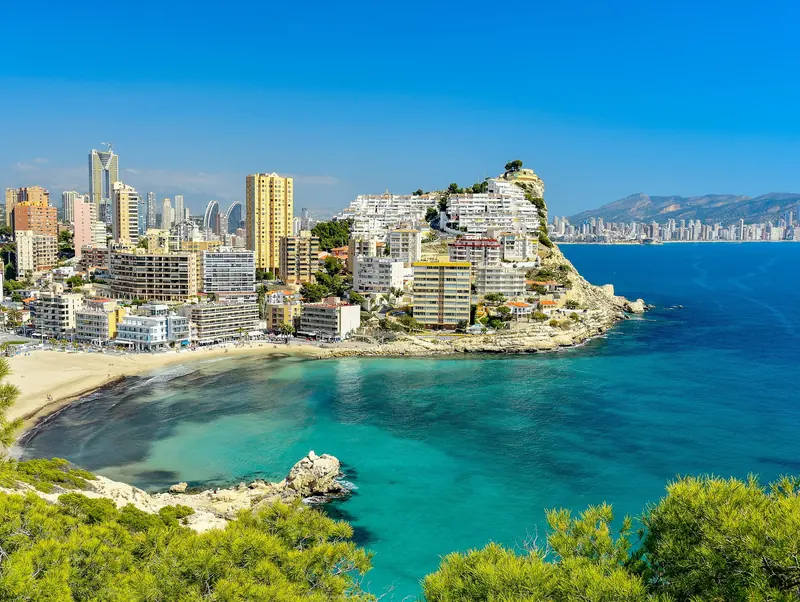
Best for first-timersA resort town on a bay, with its old town on a promontory between the Levante and Poniente beaches.
Suits first-time visitors, families and groups who like plenty going on. The TRAM station on Avenida Beniardá links Benidorm with the towns along the coast.
See places to stay in BenidormCalpe
Best for walkersA town beneath the Peñón de Ifach, the great rock that is its main symbol.
Suits walkers and couples. The Peñón is a natural park, and visits to the top are limited and booked in advance.
See places to stay in CalpeJávea (Xàbia)
Best for an old townA coastal town whose historic centre grew around the fortress church of San Bartolomé, built as a defence against pirate attacks.
Suits visitors who want a historic centre with the sea nearby. It sits on Spain's suggested coastal route between Dénia and Calpe.
See places to stay in Jávea (Xàbia)Alicante
Best for city and beachThe provincial capital, with Santa Bárbara Castle on Monte Benacantil above the port.
Suits city-and-beach breaks. The airport bus runs to the city centre, and boats leave the port for the island of Tabarca.
See places to stay in AlicanteTop things to do
The Costa Blanca mixes a dramatic rock, two old towns, a castle and a marine reserve within reach of the coast.
Peñón de Ifach
Natural parkA rock about 332 metres high at Calpe. On a clear day you can see Formentera and Cabo de Santa Pola from the top. Since 2020, visits to the summit have needed an advance booking, limited to 300 people a day, and you can book up to ten days ahead on the park's website.
Benidorm old town
Old townThe historic centre sits on a promontory between the two main beaches. The 18th-century church of San Jaime, with its blue domes, rises above narrow streets, and the Balcón del Mediterráneo is a viewpoint. Boats leave the port for the small island of Benidorm.
Santa Bárbara Castle
AlicanteA castle on Monte Benacantil with panoramic views across the city and port, reached from the Santa Cruz quarter. Check the opening times before you go.
Tabarca
Island tripA small island about 24 km from Alicante and 8 km from Santa Pola. Its waters became Spain's first marine reserve in 1986. Boats leave from the port of Alicante and take about an hour, and you can also sail from Santa Pola or Benidorm.
Guadalest
Hill villageA small village of Moorish origin with a castle, perched on a cliff and about half an hour's drive from Calpe. A car or an organised trip is the practical way to reach it.
The coastal drive
Scenic routeSpain's tourist board suggests a drive linking Dénia, Jávea, Calpe and Altea, with stops in fishing villages and at beaches along the way.
Travel essentials
Getting around
The tram makes the coast easy to cover, and the airport has bus links to Alicante and Benidorm.
From the airport
Alicante-Elche airport has bus C6 to the city centre, calling at the Luceros and Mercado stations, from where TRAM lines depart. A direct bus also links the airport with Benidorm, stopping at the station and Avenida Europa.
By tram
The TRAM, run by Ferrocarrils de la Generalitat Valenciana, links Alicante and Benidorm in about 70 minutes, with trains roughly every 30 minutes. At Benidorm you can change to line L9 for Altea, Calp, Benissa, Teulada, Gata de Gorgos and Dénia. Check the current line numbers and times.
In Benidorm
Local buses run by Llorente Bus connect the beaches, hotels and theme parks, so you can manage a week without hiring a car.
How many days do you need?
A week lets you split your time between beach days and two or three trips along the coast. It is the length most visitors choose.
With four or five nights, pick one base on the tram line and visit Alicante or Calpe for a day. Stay longer to add Tabarca and Guadalest.
Budget tips
The Costa Blanca suits most budgets, and public transport makes a car optional.
Use the tram
The TRAM links Alicante, Benidorm and Dénia, so you can visit several towns without hiring a car or paying for parking.
Compare your transfer
A direct bus links Alicante airport with Benidorm and bus C6 serves Alicante, so you may not need a taxi, depending on where you stay.
Book the Peñón early
Only 300 people a day can climb to the top of the Peñón de Ifach, so book as soon as your dates are fixed.
Travel in spring or autumn
Spain's tourist board calls spring and autumn the mildest seasons, and July and August the hottest, so the shoulder months give you comfortable weather away from the peak.
Tipping
Tipping is optional in Spain. Rounding up or leaving a little cash for good service is appreciated but not expected.
Costa Blanca FAQ
How many days do you need on the Costa Blanca?
A week suits beach days plus trips to Alicante, Calpe and the hill villages. Four or five nights works for a shorter break.
Can you climb the Peñón de Ifach?
Yes, but visits to the top are by advance booking, limited to 300 people a day. You can book up to ten days ahead through the park's website.
How long is the tram from Alicante to Benidorm?
About 70 minutes, with trains roughly every 30 minutes. At Benidorm you can change to line L9 for Altea, Calp and Dénia.
How do you get from Alicante airport to Benidorm?
There is a direct bus from the airport to Benidorm, and you can also take bus C6 to Alicante and continue on the tram.
How do you get to Tabarca?
By boat from the port of Alicante, a journey of about an hour. Boats also sail from Santa Pola and Benidorm, with more departures in the busier months.
When does the Costa Blanca feel warm?
Alicante's tourist office says autumn feels like summer, with warm temperatures until late October. July and August are the hottest months.
Comments and tips
Been there, or planning a trip? Share a tip, ask a question or add a photo. Every comment is read before it appears.
No comments yet. Be the first to share a tip.
Comments are not open just yet. Please check back soon.
Ready for Costa Blanca?
Compare hotels, apartments and resorts along the coast and lock in your dates.
See places to stay in Costa BlancaWe may earn a commission if you book, at no extra cost to you.