
Fuerteventura
Long sandy beaches, dunes and steady winds, around four and a half hours' flight from London.
- Flight from London
- Around 4.5 hours
- Ideal stay
- 7 nights
- Currency
- Euro (EUR)
- Best for
- Beaches, water sports, dunes
Why go
Fuerteventura is a long island known for its beaches and its wind. UNESCO named the island and the sea around it a Biosphere Reserve in 2009, and in the north the dunes of the Corralejo Natural Park run along the coast towards the volcanic cone of Montaña Roja.
The wind from the north-north-east keeps temperatures moderate and draws windsurfers and kitesurfers, and Spain's tourist board gives an average annual temperature of about 22 degrees. Spain's tourist board lists Corralejo, El Cotillo, Jandía, Caleta de Fuste and Cofete among the island's windsurfing beaches. Lanzarote is a short ferry ride from Corralejo, so a second island is an easy day trip.
When to go
Fuerteventura works all year. Spring and summer are traditionally the sailing season, when the trade winds draw windsurfers and kitesurfers, and summers are dry and sunny. Autumn and winter bring the big Atlantic swells to the north and west coasts, which suits surfers, along with some grey days and the occasional heavy downpour.
Where to stay
The island is long, so choose your base by the beach and the activities you want.
Links in this section go to Booking.com. We may earn a commission, at no extra cost to you.
Corralejo
Best for varietyA resort at the northern tip of the island, backed by the dunes of the Corralejo Natural Park, with beaches along the east coast.
Suits couples, families and water-sports fans. Boats leave for Isla de Lobos, ferries cross to Lanzarote, and the beach by the two main hotels is a spot for windsurfing and kitesurfing.
See places to stay in CorralejoCaleta de Fuste
Best for a central baseA resort on the east coast, in the middle of the island and only a few kilometres from the capital, Puerto del Rosario.
Suits visitors who want a central base. Spain's tourist board lists its beach among the island's windsurfing and kitesurfing spots.
See places to stay in Caleta de FusteCosta Calma
Best for windsurfersA resort on the Jandía peninsula, next to the Sotavento beach.
Suits windsurfers and kitesurfers, as Sotavento hosts international competitions. Costa Calma's own beaches are about 1.5 km long.
See places to stay in Costa CalmaMorro Jable
Best for walkersThe main resort at the southern end of the island, on the Jandía peninsula.
Suits walkers and beach lovers. A hiking route through the Jandía Natural Park takes in Morro Jable and Cofete, and ferries sail from here to Las Palmas de Gran Canaria in about two hours.
See places to stay in Morro JableTop things to do
Fuerteventura's main sights are its dunes, beaches and a small island, with a historic village inland.
Corralejo Dunes Natural Park
DunesA dune field along the north-east coast, running from Puerto Remedios beach towards the Montaña Roja volcanic cone. Corralejo is backed by imposing dunes that form part of the park, so take water and sun protection.
Isla de Lobos
Day tripA small island reached by boat from Corralejo in about 20 minutes. It became a natural park in 1994, and you need a visit permit, which can be arranged in advance or included in your booking. Trips run daily, except on a few holidays and when the weather stops them.
Sotavento
WindsurfingA beach of about 1,100 metres on the Jandía peninsula, with windy water and board, sunshade and sun-lounger hire. The resort hosts international windsurfing and kitesurfing competitions.
Cofete
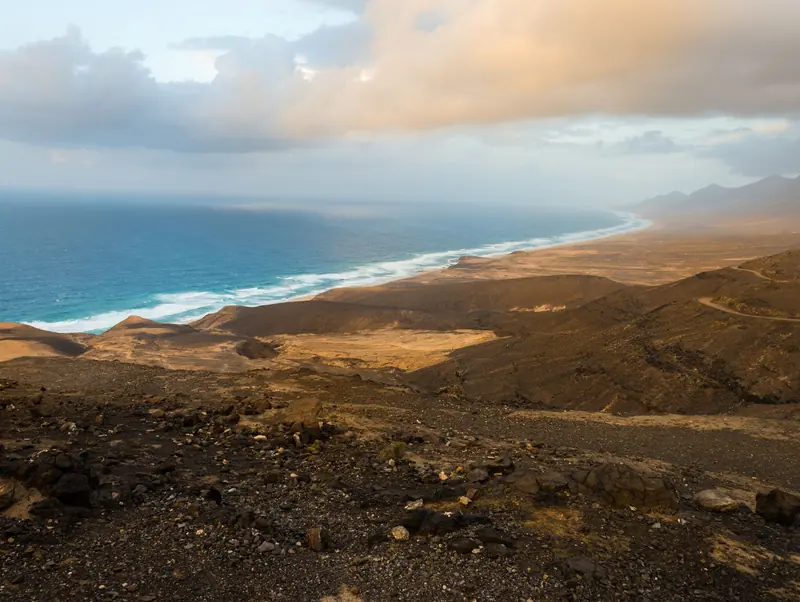
Wild beachA beach on the Jandía peninsula, listed among the island's notable beaches and part of a hiking route through the Jandía Natural Park. Check the sea conditions before you swim.
Betancuria
Old capitalThe island's capital until 1860, when Puerto del Rosario took over. It lies in the Betancuria Rural Park, and the viewpoints of Peñitas and Morro Velosa are nearby.
El Cotillo
West coastA village on the west coast and one of the island's kitesurfing and wave-sailing spots, in an area known for Atlantic swells in winter.
Travel essentials
Getting around
Fuerteventura is long and the resorts are spread out, so plan your days around your base.
Ferries to Lanzarote
Fred. Olsen Express runs two ships between Corralejo and Playa Blanca on Lanzarote: the Bocayna Express, a car-carrying fast ferry that takes about 25 minutes, and the passenger-only Buganvilla Express, which takes about 35 minutes. There are up to twelve departures a day, and bus line 6 stops at Corralejo pier.
To Gran Canaria
From Morro Jable, ferries to Las Palmas de Gran Canaria take about two hours. Timetables change with the season, so check before you plan a day trip.
By car
A hire car makes it easier to link the resorts with Betancuria, El Cotillo and Cofete, and to move between beaches when the wind changes.
How many days do you need?
A week is the classic Fuerteventura holiday. It gives you time for beach days, a trip to Isla de Lobos and a day exploring the interior.
With four or five nights, stay in one resort and choose two excursions. Stay longer to add a day trip to Lanzarote by ferry.
Budget tips
Fuerteventura suits a range of budgets, and the Canary Islands' tax rules help a little.
Lower sales tax
The Canary Islands charge their own sales tax, IGIC, at a general rate of 7%, instead of mainland Spain's 21% VAT.
Hire kit on the beach
Sotavento has board, sunshade and sun-lounger hire, so you can try water sports without bringing equipment. Choose your resort by the beach you will use every day.
Check the ferry timetable
Ferries to Lanzarote run up to twelve times a day, so you can pick a sailing that fits your plans rather than booking the first one.
Tipping
Tipping is optional in Spain. Rounding up or leaving a little cash for good service is appreciated but not expected.
Fuerteventura FAQ
How many days do you need in Fuerteventura?
A week suits beach days, a trip to Isla de Lobos and a day inland. Four or five nights works for a shorter break.
Is Fuerteventura windy?
Often. The north-north-east wind keeps temperatures moderate and is a draw for windsurfers, and the summer trade winds make the island a kitesurfing destination.
Can you visit Isla de Lobos?
Yes. Boats leave Corralejo and take about 20 minutes. You need a visit permit, which can be arranged in advance or included in your booking, and trips can be cancelled by bad weather.
How do you get from Fuerteventura to Lanzarote?
By ferry from Corralejo to Playa Blanca. The fast car ferry takes about 25 minutes and the passenger ship about 35 minutes.
Where can you windsurf on Fuerteventura?
Spain's tourist board lists Corralejo, El Cotillo, Jandía, Caleta de Fuste and Cofete among the island's windsurfing beaches.
Is Fuerteventura good for surfing?
Autumn and winter are the peak surf season, with large Atlantic swells on the north and west coasts. The island's tourism website lists surf schools and camps.
Is Fuerteventura good for winter sun?
Spain's tourist board gives an average annual temperature of about 22 degrees, though winters bring some grey days and the occasional heavy downpour.
Comments and tips
Been there, or planning a trip? Share a tip, ask a question or add a photo. Every comment is read before it appears.
No comments yet. Be the first to share a tip.
Comments are not open just yet. Please check back soon.
Ready for Fuerteventura?
Compare hotels, apartments and all-inclusive resorts across the island and lock in your dates.
See places to stay in FuerteventuraWe may earn a commission if you book, at no extra cost to you.