
Copenhagen
Colourful harbours, cycle-friendly streets and a famous food scene, about two hours' flight from London.
- Flight from London
- Around 2 hours
- Ideal stay
- 3 nights
- Currency
- Danish krone (DKK)
- Best for
- Design, food, cycling
Why go
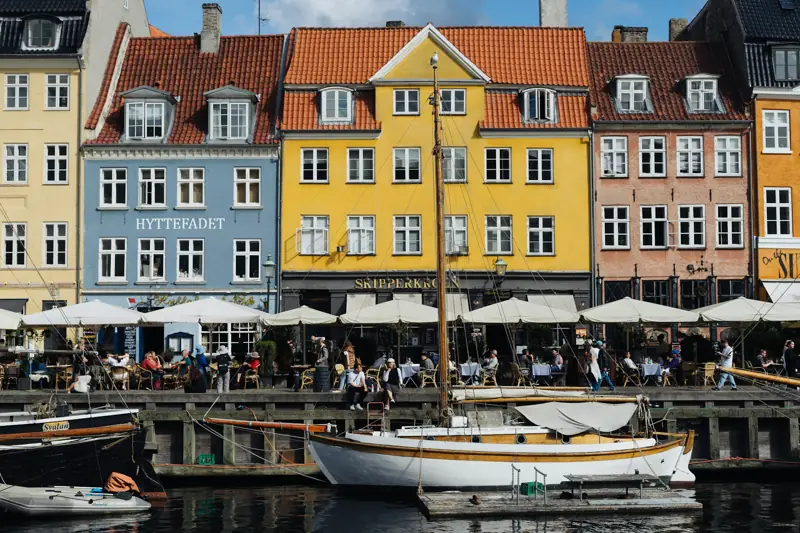
Copenhagen is compact, calm and easy to enjoy. The old centre is lined with canals and painted townhouses, and cycling is a normal way to get around, with dedicated lanes on most main streets. In a single day you can take in a royal castle, a harbour and a fairground.
The city is known for design, bakeries and a food culture that runs from open sandwiches (smørrebrød) to fine dining. It is also expensive, so a short stay is the right length: long enough for the highlights without overspending. Evenings are unhurried, with candles on the table in even the plainest café, a habit the Danes call hygge.
When to go
Late spring to early autumn is the best time, with long, bright evenings and life spilling onto the harbour. Winter days are short and dark, though Christmas lights and festive events at Tivoli make December cosy. Summer evenings stay light late, which is why the harbour and the parks are so busy.
Where to stay
The centre is compact and well connected by metro, bus and bike, so any of these four areas puts you within easy reach of the sights.
Links in this section go to Booking.com. We may earn a commission, at no extra cost to you.
Indre By (the Inner City)
Best for first-timersThe old centre, with the pedestrian street Strøget, Nyhavn, Christiansborg and the Round Tower all within walking distance.
Suits a short first visit when you want to walk everywhere. Hotels are pricey here, and weekend nights can be loud. Book early for summer weekends.
See places to stay in Indre ByVesterbro
Best for nightlife and foodA lively district beside the central station, with the former Meatpacking District (Kødbyen) full of bars and restaurants, and Tivoli at its edge.
Suits travellers who want nightlife and good transport links. Streets close to the station can be busy late at night.
See places to stay in VesterbroNørrebro
Best for a local feelA multicultural, youthful district of independent shops, cafés and parks, with the leafy Assistens Cemetery, where Hans Christian Andersen is buried.
Suits longer stays and repeat visitors. It is a short bike or bus ride from the centre.
See places to stay in NørrebroChristianshavn
Best for canals and calmA village-like district of canals, houseboats and cobbled lanes, with the Church of Our Saviour, whose spire has an outside staircase, and Freetown Christiania. The tower, completed in 1752, has 400 steps, the last 150 on the outside of the spire at a height of 86 metres. Space is limited, so book ahead.
Suits couples who want quiet evenings close to the centre. Bikes are the best way to get around.
See places to stay in ChristianshavnTop things to do
Most of Copenhagen's highlights sit within a short ride of the harbour. These are the ones worth planning your days around. Many are close enough to walk between.
Nyhavn
Go earlyThe colourful waterfront, dug in the late 1600s, is lined with painted houses and restaurants. It is crowded by midday, so visit early and walk on to the quieter canals.
Tivoli Gardens
Go in the eveningA small amusement park and garden opened in 1843 in the middle of the city, beautifully lit in the evening, with rides, music and seasonal events.
Rosenborg Castle
Royal historyA Renaissance castle built between 1606 and 1634 as a royal summer residence, now home to the Danish crown jewels, shown in an underground treasury, and set in the King's Garden, Denmark's oldest royal garden, where locals picnic.
Christiansborg Palace
Free viewsThe seat of the Danish parliament. Its tower has a free viewing platform with a view over the city's rooftops and spires.
The Little Mermaid and Kastellet
Harbour walkThe statue of the Little Mermaid is smaller than many expect, so treat it as part of a harbour walk to the star-shaped Kastellet fortress.
Freetown Christiania
Alternative CopenhagenA self-governing neighbourhood founded in 1971 in former military barracks, with colourful buildings and a distinct atmosphere. Be respectful, and don't take photographs on the main street.
Travel essentials
Getting around
Copenhagen is small enough to walk and cycle, and public transport is clean and efficient. The metro, trains and buses share one zone-based ticket system. Cycling is often the quickest way across town.
From the airport
Copenhagen Airport, in Kastrup, is linked to the centre by the metro (line M2) in about 15 minutes, and by train to Central Station. The metro station is at Terminal 3, and trains run every four to six minutes during the day. Make sure your ticket covers the airport zone.
By bike
Hire a bike or use a bikeshare scheme to explore like a local. Cyclists have their own lanes, so stay in lane, signal with your hand when turning or stopping, and lock your bike.
Tickets and passes
Buy tickets from machines or in the official app. A Copenhagen Card bundles transport and attractions and is valid for 24, 48, 72 or 120 hours, but it only pays off if you plan to visit many of them. The Discover version includes the airport journey.
How many days do you need?
Three nights is enough for the old centre, the harbour, a museum or two and a district such as Nørrebro or Vesterbro in the evening. Add a long lunch or, in summer, a swim: the city has several harbour baths where you can jump straight into the water.
With a fourth day, take the train north to Helsingør, around 45 minutes away, to see Kronborg Castle, a UNESCO World Heritage Site and the setting for Shakespeare's Hamlet, and stop at the Louisiana Museum of Modern Art in Humlebæk on the way.
Budget tips
Copenhagen is expensive compared with many European cities, but a few choices keep costs sensible. The city is best done at a slow pace, and you will spend less if you walk and cycle between the main sights.
Eat smart
Lunch menus, bakeries and street food are far cheaper than dinner in a restaurant. Markets such as Torvehallerne have plenty of good lunch options.
Free water and bikes
Tap water is safe to drink, so carry a bottle. A bike is usually cheaper than most transport, so hire one for a day.
Tipping
Service is included in the bill, so tipping is not expected. Round up if you are particularly pleased.
Copenhagen FAQ
How many days do you need in Copenhagen?
Three nights covers the old centre, the harbour and a district or two at a relaxed pace. Add a fourth day for a trip to Helsingør.
Does Copenhagen use the euro?
No. Denmark uses the Danish krone (DKK). Cards are accepted almost everywhere, and some places prefer them to cash.
How do I get from Copenhagen airport to the city centre?
The metro runs from the airport to the centre in about 15 minutes, and trains go to Central Station. Check that your ticket covers the airport zone.
Is Copenhagen walkable?
The old centre is compact and walkable, and bikes, buses and the metro cover the rest.
How long is the train to Helsingør?
About 45 to 50 minutes on the Kystbanen line from Copenhagen Central Station. Kronborg Castle, which dates from 1574, is a UNESCO World Heritage Site.
When is the best time to visit Copenhagen?
May to August bring the longest days and the best harbour weather. December is cosy thanks to the Christmas lights and Tivoli.
Comments and tips
Been there, or planning a trip? Share a tip, ask a question or add a photo. Every comment is read before it appears.
No comments yet. Be the first to share a tip.
Comments are not open just yet. Please check back soon.
Ready for Copenhagen?
Compare hotels, apartments and guesthouses across the city and lock in your dates.
See places to stay in CopenhagenWe may earn a commission if you book, at no extra cost to you.