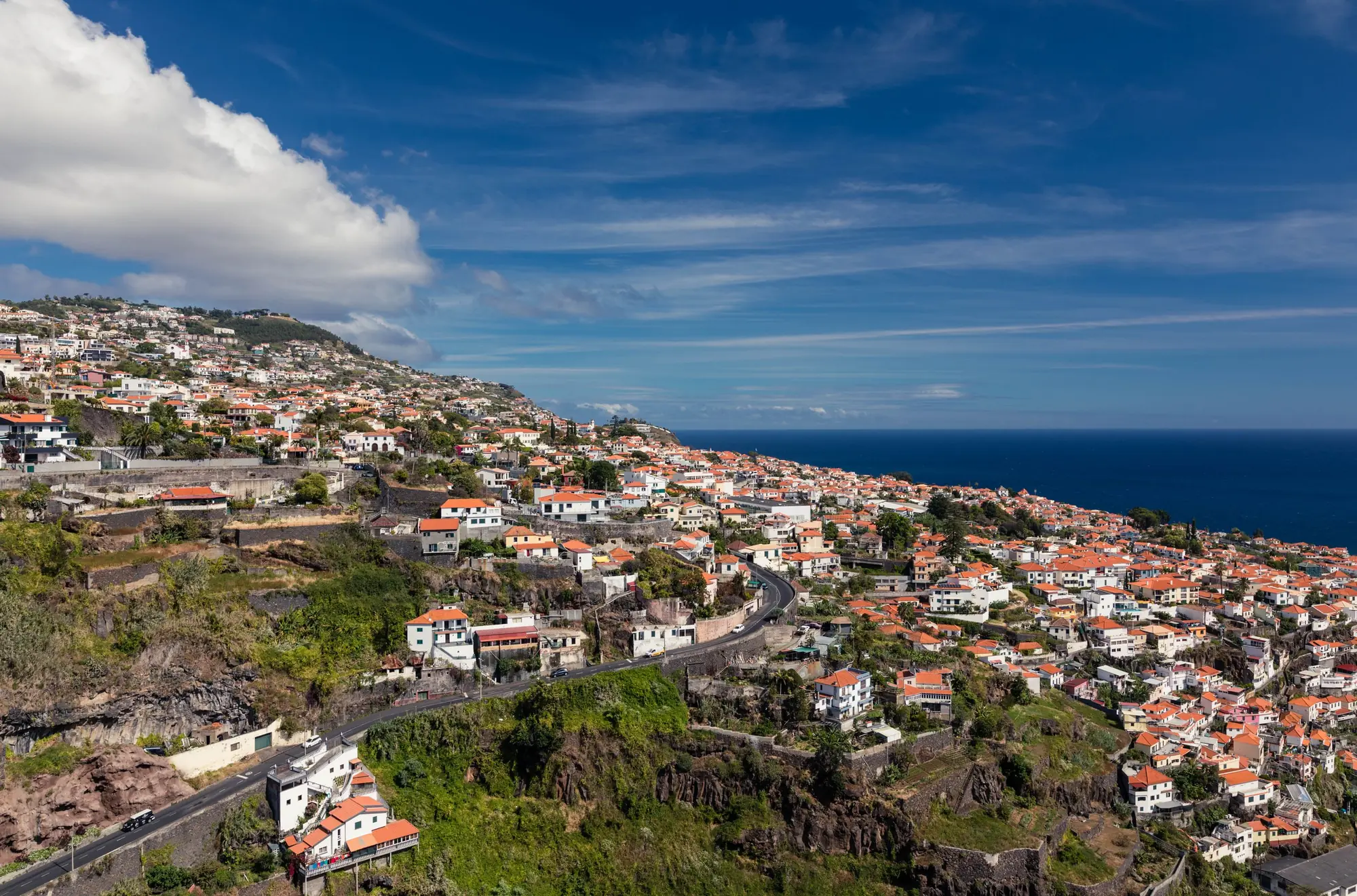
Madeira, Portugal
When to go to Madeira: seasons, flowers and levada walks
Madeira is a year-round island, but the best month depends on what you want to do. Here's how I'd choose.
Links to Booking.com on this page may earn us a commission, at no extra cost to you.
People often ask for the best month to visit Madeira, and the honest answer is: it depends what you want. The island is mild all year, so there's no bad season, only different ones. Walkers, garden fans and anyone chasing a festival will pick different months.
Let me take you through the seasons, the walking rules that have changed lately, and the areas where you might base yourself. Our Madeira guide has the quick reference.
A mild climate with local surprises
Visit Madeira's weather page describes a subtropical climate with mild temperatures all year round, with averages generally running from 17 °C in winter to 25 °C in summer. Sea temperatures, the tourist board says elsewhere, run roughly from 18 °C to 24 °C.
The catch is that the island is mountainous, so conditions vary a lot with altitude and which side you're on. It's common to find fog and cooler air up in the mountains while it's sunny and warm by the sea. In practice that means you should treat the forecast as a menu with a few options, not a single verdict. Pack layers even if you're staying on the coast, because you'll probably be heading uphill at some point.
Spring: flowers and fresh green hillsides
Spring is the season for flowers, and the Madeira Flower Festival is the highlight. Visit Madeira says it usually falls between April and May and lasts around four weeks, with most of the activity at weekends. Its FAQ gives 29 April to 30 May for the 2027 edition, and the festival page lists two allegorical parades in 2027, on 2 and 16 May. The dates move a little every year, so confirm them on the official pages before you book flights.
Spring is also often recommended for walking, when the hillsides are at their greenest. Our guide rates April and May among the best months to go, and I'd agree if flowers and walking are your priorities. The trade-off is that popular months are busier.
Summer: easy days by the sea
If a pool, a coastal town and warm sea are what you want, summer is the straightforward choice. One thing to know: one travel blog on the official Visit Madeira site notes that dry summer weather can leave some waterfalls without much water, whereas the wetter months bring them back to life. It's a minor point, but worth knowing if waterfall photos are on your list.
Autumn and winter: quieter and still mild
Visit Madeira says autumn and winter bring mild weather, fewer crowds and good conditions for hiking and cultural visits. Our guide also points out that the New Year's Eve fireworks over Funchal Bay are a winter highlight. September and October both rate as best months in our guide, which is a nice combination of warm sea and thinner crowds.
Rain, wind or fog can close trails. Check before you set out, not when you arrive at the trailhead.
Levada walking: the rules have teeth
The levadas, Madeira's old water channels, now carry walking paths through the Laurisilva forest, which is classified as a UNESCO World Natural Heritage site. They're one of the main reasons to come, and they come with rules.
According to Visit Madeira's FAQ, access to all classified walking trails (PR) requires a prior reservation through the SIMplifica digital platform, for individuals, groups and tourism companies alike, and entering a classified trail without one is an infraction. Closures and restrictions are decided by the regional authority, the IFCN, taking account of safety, weather and conditions on the ground. Its FAQ lists each trail as open, restricted or closed, and notes that a weather warning doesn't automatically close every classified trail.
On kit, Visit Madeira's advice to walkers recommends walking boots for all walks, plus waterproofs, a hat, gloves, spare clothing, a whistle, food and drink, and the relevant map. It suggests a torch too, since some levada walks pass through tunnels. In heavy rain or strong winds, it says, don't go on, or turn back the way you came.
Two walks from our guide give a sense of scale. The PR 6 Levada das 25 Fontes starts at Rabaçal and is about 4.3 km, with an estimated three hours and a moderate difficulty, leading to a lagoon fed by springs. The PR 1 trail links Madeira's two highest peaks, Pico do Areeiro and Pico Ruivo, in a moderate hike of about three hours, 6.1 km one way.
Where to base yourself
Most visitors stay in Funchal or on the south coast, but the north and west offer a different pace. Our guide covers four areas.
Funchal is the capital, with the Mercado dos Lavradores, the old town and the cable car to Monte. It suits first-timers who want restaurants and sights on the doorstep. The airport is about 16 km away according to its operator ANA, and Visit Madeira puts the trip at around 20 to 25 minutes by Aerobus, taxi, transfer or hire car. See places to stay in Funchal.
Câmara de Lobos is a quieter base on the south coast, close to Funchal and the Cabo Girão skywalk. See places to stay in Câmara de Lobos. Porto Moniz on the north coast is known for its volcanic natural pools and for the Laurisilva trails nearby. See places to stay in Porto Moniz. And Santana, also on the north coast, suits walkers who want to start early on the high trails, with the Pico Ruivo viewpoint close by. See places to stay in Santana.
So, which month?
If flowers matter most, aim for spring and check the Flower Festival dates. If you want easy beach and pool days, pick summer. If you'd rather have mild weather, fewer people and a quieter island, autumn and winter are worth a serious look. Either way, remember that a levada walk is a booking, not a drop-in, and keep an eye on the weather.
For more ideas on warmer escapes, our winter sun collection has options that suit the colder months.
Planning this trip? Read our Madeira guide for the full picture.
Links to Booking.com on this page may earn us a commission, at no extra cost to you.