
Cyprus
Ancient mosaics, painted mountain churches and warm seas on one island, around four and a half hours' flight from London.
- Flight from London
- Around 4.5 hours
- Ideal stay
- 7 nights
- Currency
- Euro (EUR)
- Best for
- Beaches, history, sunshine
Why go
Cyprus pairs beaches with ancient sites. Paphos is a UNESCO World Heritage Site, with mosaics in the Houses of Dionysos, Theseus, Aion and Orpheus dating from roughly the 2nd to the 5th century AD, and the rock-cut Tombs of the Kings. In the Troodos mountains, UNESCO lists ten Byzantine churches with painted murals.
Practical matters are straightforward for UK visitors. Cyprus adopted the euro on 1 January 2008, and traffic drives on the left, as in the UK. Visit Cyprus describes long dry summers from mid-May to mid-October, mild winters from December to February and coastal sea temperatures above 22 degrees from June to November.
When to go
Visit Cyprus describes an intense Mediterranean climate. In July and August maximum temperatures reach between 27 and 38 degrees, and January is the coolest month. The sea climbs to 27 degrees in August. Winter can bring rain, so take extra care when driving then. Spring and autumn are comfortable for sightseeing, while summer suits beach holidays.
Where to stay
Cyprus has four main coastal bases, each with a different feel. Choose by the sights and beaches you want.
Links in this section go to Booking.com. We may earn a commission, at no extra cost to you.
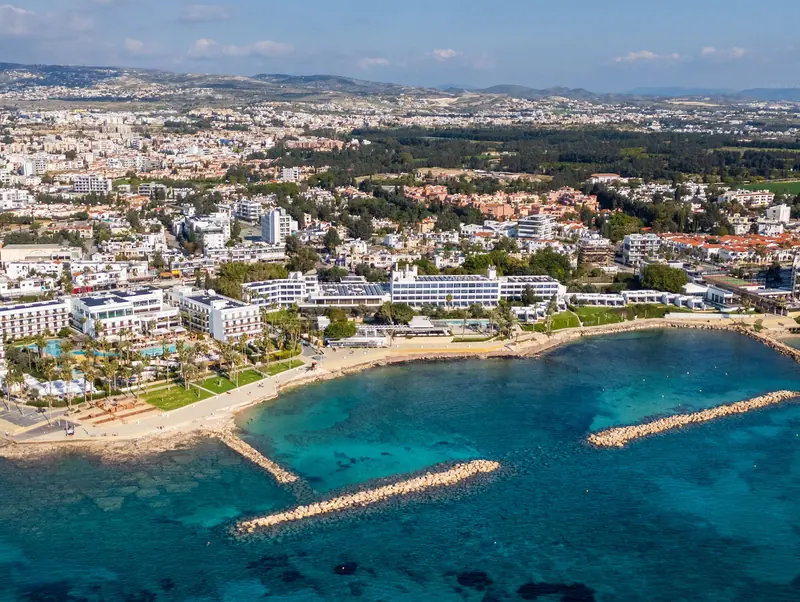
Paphos
Best for historyA coastal town in the west, where the UNESCO-listed mosaics and the Tombs of the Kings lie in Kato Paphos.
Suits couples and history lovers. Paphos has its own airport, and Petra tou Romiou, the rock where legend says Aphrodite rose from the waves, is about 25 km to the east.
See places to stay in PaphosLimassol
Best for a city and marinaA seaside city on the south coast, with a medieval castle in the old town above the old harbour.
Suits visitors who want restaurants, a marina and a historic centre. The Ottomans rebuilt the castle in its present form in 1590.
See places to stay in LimassolAyia Napa
Best for beachesA resort town close to Nissi Beach, a small bay with an islet you can walk to at low tide.
Suits families and groups. Visit Cyprus describes the coast around Cape Gkreko, on the drive towards Protaras, as having spectacular sea caves.
See places to stay in Ayia NapaLarnaca
Best for a first nightA coastal town with one of the island's two airports.
Suits short stays and arrival nights. The Salt Lake and the Hala Sultan Tekke mosque, built in 1816 on the lake's shore, are about 5 km west of the town.
See places to stay in LarnacaTop things to do
Cyprus has ancient mosaics, painted churches and legendary beaches within a morning's drive of each other.
Paphos mosaics
UNESCO siteUNESCO describes the mosaics of Nea Paphos as among the most beautiful in the world. The main houses are those of Dionysos, Theseus, Aion and Orpheus. Conservation work is ongoing, so some areas may be closed.
The Tombs of the Kings
Rock-cut tombsLarge tombs cut into the rock in Kato Paphos, part of the same UNESCO listing. They held officials and aristocrats rather than kings, and take their name from their size and grandeur.
The Troodos painted churches
Byzantine muralsUNESCO lists ten churches in the Troodos region, each with painted murals. Plan a full day for the mountain villages.
Petra tou Romiou
Aphrodite's RockA rock about 25 km east of Paphos. Legend says Aphrodite rose from the waves here, and the name means roughly 'the Rock of the Greek'.
Kourion
Roman theatreA hilltop city-kingdom west of Limassol, with a Greco-Roman theatre that still hosts performances, mosaic-floored houses and an agora.
Larnaca Salt Lake
WetlandA Ramsar and Natura 2000 site, where thousands of flamingos spend part of the cooler months. Sources give different months, so ask locally before you go.
Travel essentials
Getting around
Cyprus has no trains, but buses, shared taxis and four-lane motorways link the main towns. The Akamas Peninsula, a natural area with unspoiled scenery, lies north of Paphos, and the Baths of Aphrodite are near Polis, about 48 km from Paphos.
From the airport
Cyprus has two airports, Larnaca and Paphos, and airport transfer buses link them with the towns. The Kapnos Airport Shuttle runs between the two airports in about 90 minutes. Check current timetables with the operators.
By bus and shared taxi
Interurban buses link all the major towns daily. Shared intercity taxis, with eight passengers to a car, connect the main towns and run about every half hour. Four-lane motorways link Nicosia with Limassol, Larnaca, Paphos and Ayia Napa.
By car
Traffic keeps to the left, and on motorways the right lane is for overtaking. Non-European visitors may drive on their own country's licence for up to 30 days, or with an international licence. Allow extra time on winter roads in the rain.
How many days do you need?
A week is the classic Cyprus holiday. It gives you time for the beach, a day among the Paphos sites and a day in the mountains or around Limassol.
With four or five nights, choose one base and plan two excursions. Stay longer to add Larnaca's Salt Lake, Kourion and the Troodos churches, and leave time for the beach.
Budget tips
Cyprus suits many budgets, and the bus network makes a car optional for a short stay.
Use the buses
Interurban buses and shared taxis link the main towns, so you may not need a car for your whole stay.
Combine the Paphos sites
The mosaics and the Tombs of the Kings are in the same UNESCO property in Kato Paphos, so see them on the same day.
Travel in spring or autumn
Summer temperatures can reach 38 degrees in July and August, so the cooler months are more comfortable for sightseeing.
Pay in euros
The euro has been the currency since 2008, so there is nothing to exchange if you arrive with euros.
Cyprus FAQ
How many days do you need in Cyprus?
A week covers the beach, the Paphos sites and a day in the mountains. Four or five nights works for a shorter break.
Does Cyprus drive on the left?
Yes. Official Visit Cyprus material says traffic keeps to the left, the same as in the UK.
Does Cyprus use the euro?
Yes. Cyprus adopted the euro on 1 January 2008.
Is there a train in Cyprus?
No. Interurban buses and shared taxis link the major towns.
How long is the shuttle between Larnaca and Paphos airports?
The Kapnos Airport Shuttle takes about 90 minutes. Check the current timetable before you travel.
What is Petra tou Romiou?
A rock about 25 km east of Paphos. Legend says Aphrodite rose from the waves there, and the name translates roughly as 'the Rock of the Greek'.
Where are the Troodos painted churches?
In the Troodos mountains, inland from the coast. UNESCO lists ten Byzantine churches in the region, all with murals, so a hire car or an organised tour makes the day easier.
What are the Baths of Aphrodite?
A site near Polis, about 48 km north of Paphos, on the edge of the Akamas Peninsula, which Visit Cyprus describes as a natural area with unspoiled scenery.
When is the sea warmest in Cyprus?
Coastal sea temperatures stay above 22 degrees from June to November and reach 27 degrees in August.
Comments and tips
Been there, or planning a trip? Share a tip, ask a question or add a photo. Every comment is read before it appears.
No comments yet. Be the first to share a tip.
Comments are not open just yet. Please check back soon.
Ready for Cyprus?
Compare hotels, villas and resorts across the island and lock in your dates.
See places to stay in CyprusWe may earn a commission if you book, at no extra cost to you.