
Budapest
Thermal baths, grand riverside architecture and lively ruin bars, about two and a half hours' flight from London.
- Flight from London
- Around 2.5 hours
- Ideal stay
- 3 nights
- Currency
- Hungarian forint (HUF)
- Best for
- Baths, architecture, nightlife
Why go
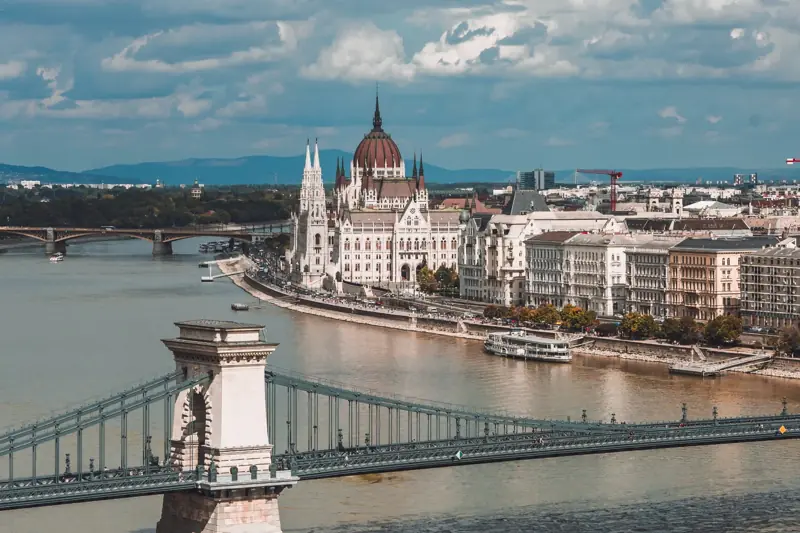
Budapest is really two cities on either side of the Danube: hilly, historic Buda and flat, lively Pest, united as one city in 1873. The river, lined with grand buildings and crossed by handsome bridges, is the city's backbone, and it looks its best at dusk.
It is also a city of baths. Thermal springs have fed bathhouses here for centuries, and a long soak followed by coffee and cake in an old café is as much a part of a visit as the sights.
When to go
Spring and early autumn are ideal for walking and river views, with mild weather. Summer is hot and busy, though the evenings are lively. Winter is cold, but it is the best time for the thermal baths, and Christmas markets fill the squares in December.
Where to stay
Budapest's main sights sit on both banks of the river. These four areas put you within a short walk or tram ride of most of them.
Links in this section go to Booking.com. We may earn a commission, at no extra cost to you.
Inner City and Leopold Town
Best for first-timersThe heart of Pest, with the Danube promenade, St Stephen's Basilica, the shopping street Váci utca and the Chain Bridge close by.
Suits a short first visit when you want to walk everywhere. It is lively and touristy, and restaurant prices reflect that.
See places to stay in the Inner CityCastle District
Best for views and quietOn Castle Hill in Buda, a district of cobbled streets and historic houses, with Matthias Church and Fisherman's Bastion.
Suits couples and early risers. It is peaceful in the evenings but has fewer restaurants, and the way down to Pest is steep.
See places to stay in the Castle DistrictJewish Quarter
Best for food and nightlifeThe ruin bars, street food and bohemian cafés of District VII, home to the Dohány Street Synagogue, the largest synagogue in Europe.
Suits groups and anyone who wants the evening on the doorstep. It is noisy at weekends, so light sleepers should look elsewhere.
See places to stay in the Jewish QuarterAndrássy Avenue
Best for eleganceA tree-lined boulevard of grand townhouses, cafés and the Hungarian State Opera, listed by UNESCO, leading to Heroes' Square and City Park.
Suits travellers who like a stately setting, with the M1 metro line running beneath it for quick trips to the centre.
See places to stay on Andrássy AvenueTop things to do
Budapest's headline sights line both banks of the Danube. These are the ones worth planning your days around.
The Parliament Building
Book aheadA neo-Gothic building on the Pest bank, completed in the early 1900s. It can be visited only on a guided tour, so book ahead. The tour lasts about 45 minutes, with a guide or an audioguide in English, Hungarian, French, German, Italian or Spanish. Advance tickets are sold online only. It looks best from across the river at night.
Buda Castle and Fisherman's Bastion
ViewsCastle Hill has sweeping views over the Danube. The terraces of Fisherman's Bastion were built in the late 19th and early 20th centuries. Walk up or take the funicular.
The thermal baths
Pack swimwearSzéchenyi Baths in City Park, which opened in 1913, have outdoor pools, but they have not admitted children under 14 since August 2025, so families may prefer another bath. Gellért Baths in Buda are Art Nouveau, and Rudas Baths have an Ottoman-era dome. Bring a towel and flip-flops, or hire them.
The Great Market Hall
Food stopA large iron-and-brick hall, opened in 1897, with produce downstairs and food stalls above. Try lángos, a deep-fried flatbread, and anything with paprika.
The Danube at night
EveningA river cruise passes Parliament and the bridges. On the Pest embankment, Shoes on the Danube Bank is a memorial to Jews shot into the river in the Second World War.
Margaret Island
Green escapeA largely car-free park island in the Danube between Buda and Pest, with gardens, running tracks, ruins and a musical fountain. Walk or hire a bike.
Travel essentials
Getting around
The centre is walkable, and public transport is frequent and good value. BKK runs the metro, trams and buses under one ticket system.
From the airport
Budapest Liszt Ferenc Airport is about 16 km from the centre. The 100E airport express bus runs to Deák Ferenc tér, and it has its own fare. Taxis use a fixed-price system booked at the official desk.
Travelcards
For several journeys in a day, the 24-hour and 72-hour Budapest travelcards cover unlimited travel on BKK services within the city limits, including the suburban HÉV lines. You can buy them in the BudapestGO app up to 30 days ahead, but they are not valid on the 100E airport express.
Tickets and checks
Buy tickets from machines or in the BKK app, and validate paper tickets when you board. Inspectors check tickets frequently, so keep yours until the end of the journey.
Metro and trams
Line M1 opened in 1896 as the first underground railway in continental Europe. Tram 2 runs along the Pest embankment and has fine views of the river.
How many days do you need?
Three nights lets you see both banks, take a bath and still enjoy the evenings. Spend one day in Pest, one in Buda, and keep one for the baths and the Jewish Quarter.
With a fourth day, take the H5 suburban railway from Batthyány tér to Szentendre, an artists' town on the Danube about 20 km north of the city, in about 40 minutes, or explore the Danube Bend.
Budget tips
Budapest is good value compared with many European capitals, but a few habits help.
Pay in forint
If a card machine or ATM offers to charge you in pounds or euros, decline and pay in HUF. Exchange offices away from the main tourist streets usually give better rates.
Use the baths wisely
Weekday visits and early mornings are quieter. Many baths offer cheaper tickets without a private cabin, so check the current options on the official websites.
Check the service charge
Many restaurants add a service charge to the bill, so check before you tip as well.
Budapest FAQ
How many days do you need in Budapest?
Three nights covers both banks, a bath and a river cruise at a relaxed pace. Add a fourth day for Szentendre or the Danube Bend.
Does Budapest use the euro?
No. Hungary uses the forint (HUF). Cards are widely accepted, and you should choose to pay in forint when a machine offers a currency conversion.
How do I get from Budapest airport to the city centre?
The 100E airport express bus runs to Deák Ferenc tér in the centre, and taxis use a fixed-price system booked at the official desk.
Which public transport ticket should I buy in Budapest?
For several journeys in a day, a 24-hour or 72-hour travelcard covers unlimited travel on BKK services within the city limits. You can buy one in the BudapestGO app or from a ticket machine. It does not cover the 100E airport express, which has its own fare.
Is Budapest walkable?
The sights on each bank are walkable, but the Danube divides the city and Buda's hills are steep. Trams, the metro and buses fill the gaps.
When is the best time to visit Budapest?
April, May, September and October bring mild weather. Winter is cold, but it is a lovely time for the thermal baths.
Comments and tips
Been there, or planning a trip? Share a tip, ask a question or add a photo. Every comment is read before it appears.
No comments yet. Be the first to share a tip.
Comments are not open just yet. Please check back soon.
Ready for Budapest?
Compare hotels, apartments and guesthouses across the city and lock in your dates.
See places to stay in BudapestWe may earn a commission if you book, at no extra cost to you.