
Berlin
Museums, canals, street art and a nightlife scene that rarely sleeps, about two hours' flight from London.
- Flight from London
- Around 2 hours
- Ideal stay
- 3 nights
- Currency
- Euro (EUR)
- Best for
- History, culture, nightlife
Why go
Berlin is the capital of Germany and its largest city, and few cities wear their recent history so openly. The Berlin Wall fell in 1989, and traces of it, such as a double line of cobblestones marking its course, sit among galleries, parks and cafés.
It is also spread out and relaxed, with big green spaces and a reputation for staying open late. Plan a few focused neighbourhood days rather than trying to cover everything, and let the transport network do the work between them. Berlin rewards curiosity: courtyards hide cafés and galleries, and a short U-Bahn ride can take you from imperial boulevards to canal-side markets.
When to go
Late spring to early autumn is the most pleasant time, with long evenings, outdoor tables and busy lakes and parks. Winters are cold and grey but quieter, and the Christmas markets make December worth a trip. Berlin is a city of open-air life, so bring layers outside the summer months.
Where to stay
Berlin has no single centre, so choose a neighbourhood by mood. All four areas below are well connected by U-Bahn and S-Bahn.
Links in this section go to Booking.com. We may earn a commission, at no extra cost to you.
Mitte
Best for first-timersThe historic centre, with Museum Island, Alexanderplatz and the courtyards of Hackescher Markt close together.
Suits a short first visit when you want the main sights on foot. Prices are higher here than in the outer districts.
See places to stay in MittePrenzlauer Berg
Best for a local feelA leafy district of cafés, independent shops and restored 19th-century apartment blocks, with the Mauerpark flea market on Sundays.
Suits couples and longer stays. Evenings are relaxed, and trams and the U-Bahn run into the centre.
See places to stay in Prenzlauer BergKreuzberg
Best for food and nightlifeA multicultural district of street food, bars and clubs, with canal-side walks along the Landwehr Canal.
Suits travellers who want energy and late nights. Some streets are noisy, so check reviews for your room.
See places to stay in KreuzbergCharlottenburg
Best for calm and eleganceThe heart of former West Berlin, with the shops of the Kurfürstendamm, Charlottenburg Palace and quiet, tree-lined streets.
Suits families and anyone who prefers calm. It has good S-Bahn and U-Bahn links to the centre.
See places to stay in CharlottenburgTop things to do
Berlin's sights are spread across the city, so group them by area. These are the ones worth planning your days around.
Brandenburg Gate and the Reichstag
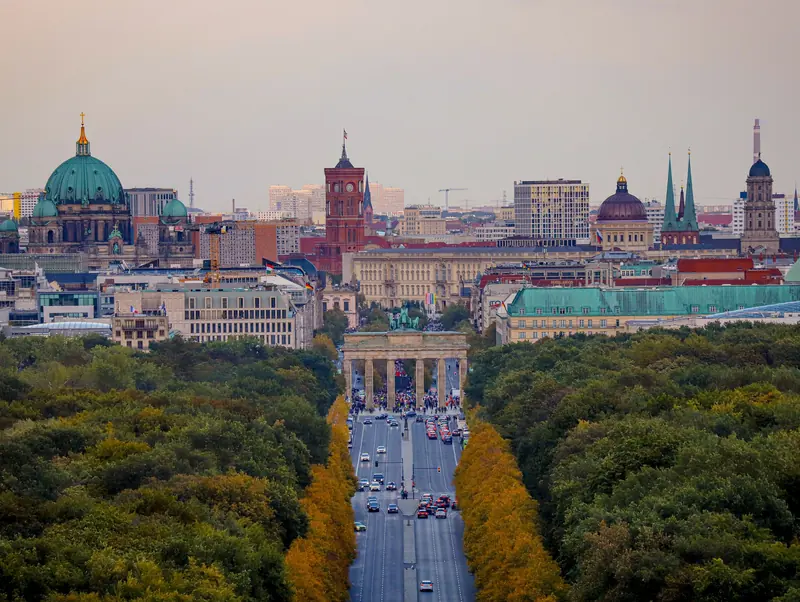
Start hereThe neoclassical Brandenburg Gate was completed in 1791. Nearby, the glass dome of the Reichstag can be visited free of charge, but you must register in advance on the Bundestag's website. The dome closes for maintenance from time to time, so check before you go. Go early in the morning for the quietest photographs.
Museum Island
Allow half a dayFive museums on an island in the River Spree, listed by UNESCO in 1999: the Altes Museum, the Neues Museum, the Alte Nationalgalerie, the Bode Museum and the Pergamon Museum. Choose one or two rather than trying them all, and book ahead for the most popular. The Pergamon Museum has been closed for renovation, so check which buildings are open.
East Side Gallery
Free, open airA stretch of the Berlin Wall 1.3 km long, covered in murals by 118 artists from 21 countries, beside the Spree. Go early or late to avoid the crowds.
Memorial to the Murdered Jews of Europe
ReflectA field of more than 2,700 concrete slabs near the Brandenburg Gate, opened in 2005, with an information centre beneath it.
Berlin Wall Memorial
HistoryOn Bernauer Straße, a preserved section of the border strip with a documentation centre and a viewing platform that explains how the Wall divided the city.
Tempelhofer Feld
Local lifeA former airport turned public park, where you can walk or cycle along the old runways. The airport stopped operating in 2008, the field opened to the public in 2010, and entry is free. Cars are not allowed.
Travel essentials
Getting around
Berlin is large, so use public transport. The U-Bahn, S-Bahn, trams and buses share the same tickets, and fares are zoned (A, B and C). A day ticket is usually better value than single tickets if you will travel several times.
From the airport
Berlin Brandenburg Airport (BER), opened in 2020, has its station beneath the terminal, with trains into the centre taking around 30 to 40 minutes. The Airport Express reaches Berlin Hauptbahnhof in about 23 minutes, stopping at Südkreuz and Potsdamer Platz. The airport is in the outer zone, so buy a ticket that covers zones A, B and C.
Tickets
Buy tickets from machines at stations, in the operators' apps or from bus drivers. Validate paper tickets at the machines on platforms before you travel, and keep your ticket for inspections.
Late at night
The U-Bahn runs all night at weekends on most lines, and night buses and trams cover the rest. Taxis and ride-hailing apps are easy to find.
How many days do you need?
Three nights works well: one day around Mitte, Museum Island and the Reichstag, one for the Wall sites and Kreuzberg, and one for a neighbourhood such as Prenzlauer Berg or Charlottenburg. Leave your evenings open: a beer garden, a late concert or a canal-side bar is as much a part of Berlin as its museums.
With a fourth day, take a trip to Potsdam, with its palaces and parks, which are a UNESCO World Heritage Site. It is around 30 minutes away by S-Bahn.
Budget tips
Berlin has a reputation as a good-value capital, and a few habits help it go further. Public transport and local food are good value, and many of the city's best experiences cost nothing.
Carry some cash
Cards are accepted in most places, but some bars, cafés and small shops still prefer cash. Keep some euros for those.
Make the most of free sights
The Reichstag dome, the East Side Gallery, the Memorial to the Murdered Jews of Europe and the city's parks cost nothing. Check whether a museum pass covers the places you want.
Tipping
Tipping is customary: round up the bill or add around 5 to 10% in restaurants, and say the total aloud when you pay.
Berlin FAQ
How many days do you need in Berlin?
Three nights covers the main sights and a couple of neighbourhoods at a relaxed pace. Add a fourth day for a trip to Potsdam.
Does Berlin use the euro?
Yes. Germany uses the euro. Cards are accepted in most places, but carry some cash for smaller bars and cafés.
How do I get from Berlin airport to the city centre?
Trains run from the station beneath the terminal to central stations in about half an hour. Buy a ticket that covers zones A, B and C.
Is Berlin walkable?
Individual districts are very walkable, but the city is large and the sights are spread out, so combine walking with the U-Bahn, S-Bahn and trams.
Can you visit the Reichstag dome?
Yes, and admission is free, but you must register in advance through the Bundestag's website with your name and date of birth. The dome closes for maintenance from time to time, so check before you go.
When is the best time to visit Berlin?
May, June and September bring pleasant weather and long evenings. December is atmospheric thanks to the Christmas markets, though it is cold.
Comments and tips
Been there, or planning a trip? Share a tip, ask a question or add a photo. Every comment is read before it appears.
No comments yet. Be the first to share a tip.
Comments are not open just yet. Please check back soon.
Ready for Berlin?
Compare hotels, apartments and guesthouses across the city and lock in your dates.
See places to stay in BerlinWe may earn a commission if you book, at no extra cost to you.