
Venice
Canals, bridges and lagoon islands in a city with no cars, about two hours' flight from London.
- Flight from London
- Around 2 hours
- Ideal stay
- 2 nights
- Currency
- Euro (EUR)
- Best for
- Romance, art, wandering
Why go
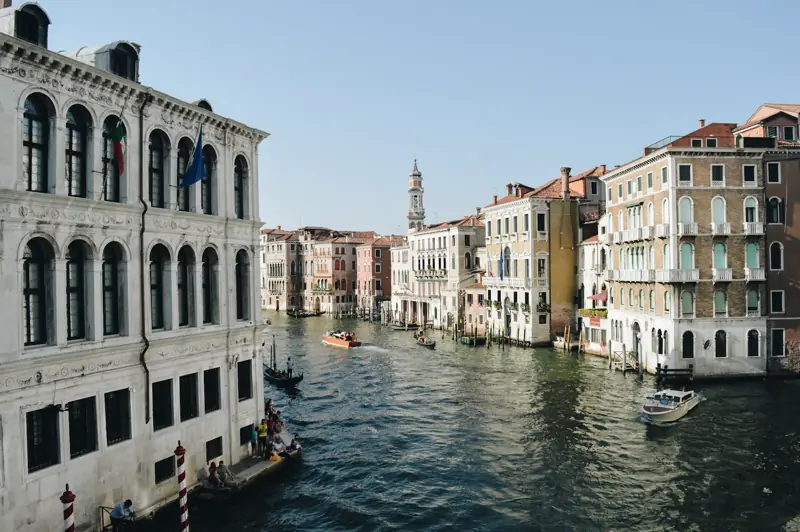
Venice is unlike anywhere else: a city built across more than a hundred small islands in a lagoon, with canals for streets and no cars. Everything is reached on foot or by boat, and that slows the pace in a way few cities manage.
The crowds around St Mark's and the Rialto are real, but a few streets away you can find quiet squares and canals. Walk early and late, get a little lost on purpose, and the city rewards you. Some of the best moments happen after the day-trippers have left.
When to go
Spring and autumn are the best times, with mild weather and fewer crowds. Carnival takes place before Lent, usually in February, and brings costumes and crowds. Summer is hot, humid and busy. In autumn and winter, exceptionally high tides (acqua alta) sometimes flood the lowest streets, so pack waterproof footwear. Early mornings and evenings are the quietest times in any season.
Where to stay
Venice is small, but the districts feel very different. Choose by the kind of trip you're after, and remember that you will walk a lot and carry your own bags over bridges.
Links in this section go to Booking.com. We may earn a commission, at no extra cost to you.
San Marco
Best for first-timersThe heart of the city, with St Mark's Square, the Basilica and the Doge's Palace on your doorstep.
Suits a short first visit when you want the main sights close by. It is the busiest and most expensive district.
See places to stay in San MarcoDorsoduro
Best for art and studentsA quieter district of galleries, squares and student cafés, home to the Gallerie dell'Accademia and the Peggy Guggenheim Collection.
Suits couples and art lovers. The waterfront promenade of the Zattere is lovely at sunset.
See places to stay in DorsoduroCannaregio
Best for a local feelA residential district of long canals and neighbourhood bars, close to the railway station and home to the Jewish Ghetto.
Suits longer stays and repeat visitors. It is calmer and cheaper than San Marco, with plenty of places to eat. Look for neighbourhood bars away from the main street.
See places to stay in CannaregioCastello
Best for quiet lanesThe large eastern district, with the Arsenale and a string of quiet lanes and squares where locals live.
Suits travellers who prefer to avoid the crowds. It has fewer restaurants and a longer walk to the main sights.
See places to stay in CastelloTop things to do
The main sights of Venice are close together, but queues can be long. These are the ones worth planning your days around.
St Mark's Basilica and Square
Go earlyThe Basilica's glittering mosaics and the square are at their best early in the morning, before the crowds arrive. Dress modestly for the Basilica, with your shoulders and knees covered. The bell tower, the Campanile, is 98.6 metres high and offers a view over the lagoon; it has a lift and needs its own ticket.
The Doge's Palace
Book aheadOnce the seat of government, it is connected to the old prison by the Bridge of Sighs. Book a time slot to avoid the longest queues. Allow a couple of hours.
The Grand Canal
By vaporettoRide the vaporetto (water bus) along the canal for palaces and bridges. Line 1 stops at every stop, so it is slow but scenic.
The Rialto Market
MorningThe area around the Rialto Bridge has long been a market district, with fish and produce stalls. Go in the morning to see it at its busiest.
Murano and Burano
Island dayMurano is known for glassmaking, and Burano for its lace and brightly painted houses. Both are reached by vaporetto.
Gallerie dell'Accademia
ArtA collection of Venetian painting from the Gothic period to the 18th century. Combine it with a walk through Dorsoduro.
Travel essentials
Getting around
Venice has no cars: you travel on foot or by boat. The vaporetto water buses are the public transport, and walking is often quickest. Bring comfortable shoes and a small bag, as luggage must be carried over bridges.
From the airport
Marco Polo Airport is on the mainland. A bus, run by ATVO or as the ACTV AeroBus, takes about 20 minutes to Piazzale Roma, or you can take the Alilaguna water bus or a water taxi. Some budget flights use Treviso airport, about 30 km north, with coaches to Venice.
By train
Trains arrive at Santa Lucia station, on the edge of the Grand Canal. Hotels on the mainland at Mestre are cheaper, and the train to Santa Lucia takes about ten minutes.
Tickets
A single ticket is valid for 75 minutes from first validation and covers the vaporetti and the ACTV buses and trams in the municipality of Venice, but it costs more than on most Italian city buses. Consider a pass valid for 24, 48 or 72 hours or seven days if you plan to use the boats often. Passes run from first validation and do not cover the airport routes.
How many days do you need?
Two nights is enough for the main sights and the lanes, but a third night lets you add the islands and a slower pace. Spend the evenings on a canal-side terrace or listening to music in a quiet square.
With a third day, take a boat trip to Murano, Burano and Torcello, or explore the quieter districts of Castello and Cannaregio.
Budget tips
Venice is expensive, but a few choices keep costs down. Staying overnight is also a good way to see the city when it is quiet.
Stay on the mainland
Hotels in Mestre cost less than in the historic centre, and the train takes minutes. Weigh the saving against the time you lose each day.
Check the access fee
Venice has introduced an access fee for day visitors on selected dates. Rules for overnight guests differ, so check the official city website before you travel. At the time of writing, the 2026 dates have finished and the city says the arrangements for 2027 will be announced by 31 December 2026.
Eat away from the main squares
Cafés on St Mark's Square charge more for a coffee. Standing at the bar is cheaper than sitting down, and cicchetti, small Venetian snacks, make a cheap lunch.
Venice FAQ
How many days do you need in Venice?
Two nights covers the main sights and a good wander. Add a third night for the islands of Murano and Burano.
Does Venice use the euro?
Yes. Italy uses the euro. Cards are widely accepted, but keep some cash for small bars and cafés.
How do I get from Venice airport to the city centre?
From Marco Polo, take the bus to Piazzale Roma, the Alilaguna water bus or a water taxi. For Treviso, coaches run to Venice.
Is Venice walkable?
Yes, and walking is often the quickest way to get around, but you will cross many bridges with steps. The vaporetto helps for longer distances.
What are the MOSE barriers in Venice?
MOSE is a system of 78 mobile gates, in four barriers across the three inlets of the Venetian lagoon. The gates are raised during exceptional high tides to hold back the sea.
When is the best time to visit Venice?
April, May, September and October bring mild weather. Winter is quiet, but high tides can flood low-lying streets.
Comments and tips
Been there, or planning a trip? Share a tip, ask a question or add a photo. Every comment is read before it appears.
No comments yet. Be the first to share a tip.
Comments are not open just yet. Please check back soon.
Ready for Venice?
Compare hotels, apartments and guesthouses across the city and lock in your dates.
See places to stay in VeniceWe may earn a commission if you book, at no extra cost to you.