
Rome
Ancient ruins, Baroque fountains and long dinners in lively piazzas, about two and a half hours' flight from London.
- Flight from London
- Around 2 hours 30 minutes
- Ideal stay
- 3 nights
- Currency
- Euro (EUR)
- Best for
- History, food, walking
Why go
Rome is a city of layers: ruins beside Baroque churches, with ordinary life on top. The historic centre is a UNESCO World Heritage Site, and you are never far from something that is hundreds or thousands of years old. It is also a city to eat in: pasta, pizza and gelato are usually best on quiet side streets rather than beside the big monuments.
The centre is more walkable than its size suggests, and the best moments are often unplanned: a fountain in a side street, a church with a Caravaggio hanging inside, a coffee at a counter. Book the big sights ahead and leave room for wandering. Pace yourself, because the summer heat and the cobbles are tiring.
When to go
Spring and autumn are the best times, with mild weather and manageable crowds. July and August are hot, and many Romans leave around Ferragosto in mid-August, although the major sights stay open. Winter is mild and quiet, with the shortest queues. Early morning is the best time for the major sights in any season.
Where to stay
Most of what you'll want to see is within walking distance of these four areas. Choose by the kind of trip you're after.
Links in this section go to Booking.com. We may earn a commission, at no extra cost to you.
Centro Storico
Best for first-timersThe old centre, around the Pantheon, Piazza Navona and Campo de' Fiori, with most of the famous sights a short walk away.
Suits a short first visit when you want to walk everywhere. It is lively and touristy, and rooms are pricey. Book early in spring and autumn.
See places to stay in the Centro StoricoMonti
Best for a village feelA characterful district of small shops, wine bars and cafés close to the Colosseum and the Roman Forum.
Suits couples and repeat visitors. Streets are narrow and hilly, and evenings are lively but friendly.
See places to stay in MontiTrastevere
Best for evenings outCobbled lanes, ivy-covered houses and trattorias on the west bank of the Tiber, busy with locals as well as visitors.
Suits groups and food lovers. It can be loud late at night, so ask for a quiet room.
See places to stay in TrasteverePrati
Best for the Vatican and calmA tidy, residential district near the Vatican and Castel Sant'Angelo, with wide streets and local restaurants.
Suits families and anyone who prefers quieter evenings. It has good metro and bus links to the centre.
See places to stay in PratiTop things to do
Rome has a lot to see, and much of it is in a small area. These are the ones worth planning your days around.
The Colosseum and the Roman Forum
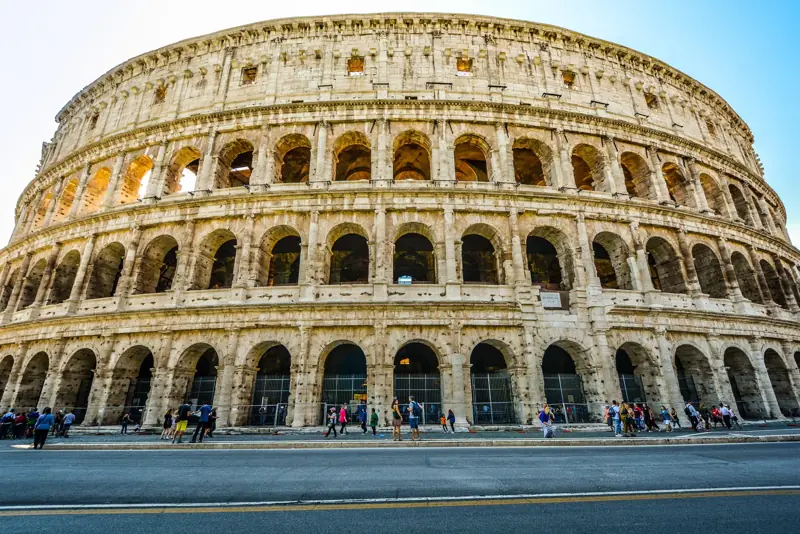
Book aheadThe Colosseum opened in AD 80. The 24-hour combined ticket gives one timed entry to the Colosseum, limited to 75 minutes, and one entry to the Forum and the Palatine Hill within 24 hours of that slot, so book ahead and bring water. Early entry or the last slot of the day is usually less crowded.
The Pantheon
Look upBuilt under Emperor Hadrian, it still has the largest unreinforced concrete dome in the world. Go early, when the light through the oculus is best.
The Trevi Fountain and the Spanish Steps
Go earlyThe Trevi Fountain was completed in 1762. It is busiest by day, so visit early in the morning or late at night. Keep an eye on your belongings in the crowds.
The Vatican Museums and St Peter's
Allow half a dayThe Vatican is an independent city-state. The museums end in the Sistine Chapel, where Michelangelo painted the ceiling between 1508 and 1512. The museums are closed on Sundays except the last Sunday of the month, when entry is free, and sleeveless tops, shorts above the knee and hats are not allowed. St Peter's Basilica is free to enter but has a security queue.
Piazza Navona and Trastevere
EveningsWander Piazza Navona for its fountains, then cross the Tiber to Trastevere for dinner among the lanes.
Villa Borghese
Green breakA large park of gardens and lakes north of the Spanish Steps, with a gallery of Renaissance and Baroque art. Hire a bike or a rowing boat. The gallery requires a reserved time slot.
Travel essentials
Getting around
The centre is best explored on foot. For longer journeys, the metro, buses and trams share one ticket system. Distances are shorter than they look on a map.
From the airport
The Leonardo Express runs non-stop from Fiumicino airport to Termini station in about 30 minutes. Ciampino airport is linked to Termini by bus.
The metro
Rome's metro has three main lines (A, B and C). Line A serves the Spanish Steps and the Vatican area. The metro does not pass through the very historic core, so walking is faster there.
Tickets
A single ticket is valid for 100 minutes from first validation, for any number of bus and tram journeys but only one trip on the metro, and it must be validated when you board. Tourist tickets for 24, 48 or 72 hours are also sold. Keep the ticket until you finish your journey.
How many days do you need?
Three nights lets you see the Colosseum and Forum, the Pantheon and the Vatican at a relaxed pace, with evenings for Trastevere and the piazzas. Add an evening stroll through the lit-up centre, when the crowds thin out.
With a fourth day, visit Ostia Antica, an ancient port town reached by the Roma-Lido train from Porta San Paolo, near Piramide metro station, or Tivoli, home to Villa d'Este and Hadrian's Villa, both UNESCO World Heritage Sites, reached by train from Termini or Tiburtina.
Budget tips
Rome has plenty of ways to keep costs down. Eating your main meal at lunch is often cheaper, as many places offer fixed-price menus.
Free drinking water
Look for the nasoni, the free drinking fountains found around the city, and refill your bottle. Many churches are free to enter and worth a look.
Dress for churches
Shoulders and knees must be covered in churches and in the Vatican, so carry a light scarf or shawl.
Cover charge and tipping
Many restaurants add a cover charge (coperto) per person, so tipping beyond that is optional. Check the menu before you order.
Rome FAQ
How many days do you need in Rome?
Three nights covers the main sights at a relaxed pace. Add a fourth day for Ostia Antica or Tivoli.
Does Rome use the euro?
Yes. Italy uses the euro. Cards are widely accepted, but keep some cash for small cafés and markets.
How do I get from Rome airport to the city centre?
From Fiumicino, the Leonardo Express runs non-stop to Termini in about 30 minutes. From Ciampino, buses run to Termini.
Are the Vatican Museums free on Sundays?
Only on the last Sunday of each month, when they open for shorter hours and entry is free. On other Sundays they are closed, so check the official calendar for closures.
Is Rome walkable?
Yes. The centre is compact enough to explore on foot, though the cobbles are uneven and summer is hot. The metro helps with longer hops.
When is the best time to visit Rome?
April to June and September to October bring mild weather and manageable crowds. July and August are hot and busy.
Comments and tips
Been there, or planning a trip? Share a tip, ask a question or add a photo. Every comment is read before it appears.
No comments yet. Be the first to share a tip.
Comments are not open just yet. Please check back soon.
Ready for Rome?
Compare hotels, apartments and guesthouses across the city and lock in your dates.
See places to stay in RomeWe may earn a commission if you book, at no extra cost to you.