
Valencia
A historic old town, futuristic architecture and a long city beach, with paella on the menu, about two and a half hours' flight from London.
- Flight from London
- Around 2 hours 30 minutes
- Ideal stay
- 3 nights
- Currency
- Euro (EUR)
- Best for
- Paella, beaches, parks
Why go
Valencia combines an old town of squares, towers and markets with a modern waterfront and a beach a short tram ride away. It is flat, sunny and easy to explore, and it feels relaxed compared with Spain's biggest cities. The old town is small enough to cover on foot in a day.
It is also the home of paella, and eating it here, near the rice fields of the Albufera, is part of the trip. Add the parks, the bike lanes and the long evenings, and Valencia suits both a city break and a seaside holiday.
When to go
Spring and autumn are ideal, warm enough for the beach without the summer heat. July and August are hot and humid. Winter is mild and sunny, perfect for sightseeing. Las Fallas in March fills the streets with huge sculptures and fireworks, and rooms sell out early. UNESCO added the festival to its list of intangible cultural heritage in 2016. Early mornings and evenings are the best times to walk in summer.
Where to stay
Valencia's centre is compact and flat, and these four areas give you a mix of old town, food and beach.
Links in this section go to Booking.com. We may earn a commission, at no extra cost to you.
Ciutat Vella (the Old Town)
Best for first-timersNarrow lanes around the cathedral, the Central Market and the Lonja de la Seda, with tapas bars and the main sights on your doorstep.
Suits first-time visitors and short breaks. It is atmospheric and busy, and some streets are noisy at night.
See places to stay in the Old TownRuzafa
Best for food and nightlifeA lively district south of the centre, full of independent cafés, restaurants and bars, and within walking distance of the old town.
Suits foodies and anyone who likes a local, creative feel. Weekend nights can be loud.
See places to stay in RuzafaEixample
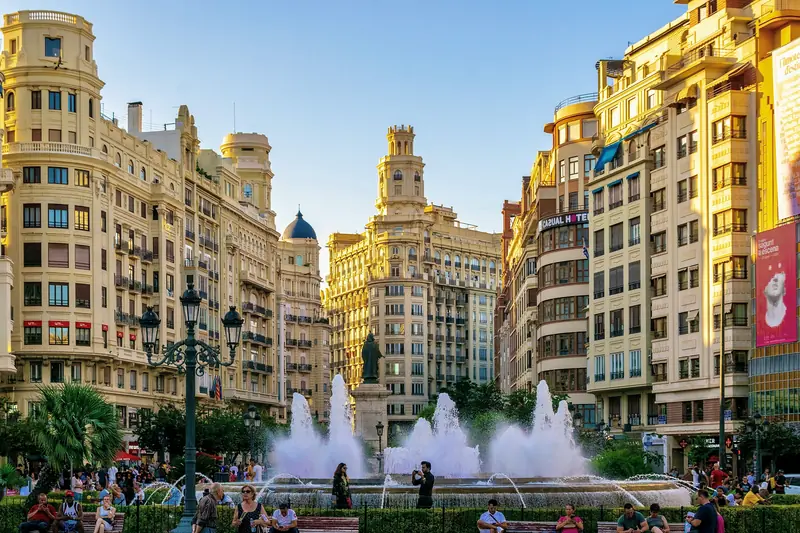
Best for eleganceA district of 19th-century boulevards around the Plaza del Ayuntamiento, with shops, cafés and the main railway station nearby.
Suits couples and travellers who want a calm, central base. It is an easy walk to the old town.
See places to stay in the EixampleCabanyal and the beach
Best for the seaA former fishing district beside the sea, with tiled houses, beach restaurants and the long sandy Malvarrosa beach.
Suits beach lovers and families. It is a short tram or metro ride from the centre.
See places to stay in CabanyalTop things to do
Valencia's sights are compact and flat, which makes them easy to combine. These are the ones worth planning your days around.
The Cathedral and the Micalet
Climb for viewsThe cathedral holds a chalice said to be the Holy Grail, kept in its own chapel, and you can climb the Micalet bell tower, begun in 1381, for views over the old town. The climb is around 207 steps and needs a separate ticket. Check the opening times. The square outside is a good place for a coffee.
The Central Market and the Lonja
MorningThe modernist Central Market is the place for fresh produce, jamón and horchata. Nearby, the Lonja de la Seda is a Gothic silk exchange built between 1482 and 1533, and a UNESCO World Heritage Site since 1996.
The City of Arts and Sciences
FuturisticA complex of white buildings and pools designed by Santiago Calatrava, with a science museum, an aquarium and an opera house. Walk through it even if you skip the museums. The buildings are at their best at sunset, when the pools reflect the light.
The Turia Gardens
Free, greenA park of more than nine kilometres along the former course of the Turia river, with paths for walking and cycling. It links the old town with the City of Arts and Sciences.
Malvarrosa and Las Arenas
Beach timeThe city's beaches are wide and sandy, with promenades and beach restaurants. Metro and tram lines run to the beach, so you can swim after lunch.
The Albufera
Half a dayA freshwater lagoon south of the city, surrounded by rice fields, where you can take a boat at sunset and eat paella in a village restaurant. About 10 km from the centre.
Travel essentials
Getting around
Valencia is flat and compact, so walking and cycling are easy. The metro, trams and buses cover longer journeys, with six metro lines and four tram lines that also reach the airport, the beaches and the Albufera. Hotels charge a tourist tax, so check what applies to your booking. Streets in the old town are narrow, so cars are best avoided.
From the airport
Valencia airport is linked to the centre by metro lines 3 and 5, taking around 20 minutes. Taxis are also available. Check current fares before you travel.
By bike
The city has many bike lanes, and Valenbisi is the public bike-share scheme. The Turia Gardens are a great place to ride.
Getting further afield
Sagunto, with its Roman theatre and hilltop castle, is a short train ride north. Check the timetables, as services change.
How many days do you need?
Three nights covers the old town, the City of Arts and Sciences and an afternoon on the beach. With four, add the Albufera and a long paella lunch. Leave time for a long lunch, as meals in Valencia are leisurely.
With five nights, add a day trip to Sagunto or further along the coast.
If you're visiting for Las Fallas in March, book well ahead, as hotels sell out early.
Budget tips
A few simple habits help your money go further in Valencia. Eating the local set lunch is a good way to spread the cost.
Use the free green spaces
The Turia Gardens and the beaches cost nothing, and a walk through the old town is free.
Eat the menú del día
Many restaurants offer a fixed-price lunch menu on weekdays, which is cheaper than dinner. Check the prices outside.
Use the metro and bikes
The metro and the bike-share scheme are cheaper than taxis, and the centre is flat and easy to ride.
Tipping
Tipping is optional in Spain. Rounding up the bill or leaving a little cash for good service is appreciated but not expected.
Valencia FAQ
How many days do you need in Valencia?
Three nights covers the old town, the City of Arts and Sciences and some beach time. Add a day for the Albufera.
How do I get from Valencia airport to the city centre?
Take metro line 3 or 5 into the centre, or a taxi. Check current fares before you travel.
Is there a beach in Valencia city?
Yes. Malvarrosa and Las Arenas are a short tram or metro ride from the old town.
Is Valencia a good city for cycling?
Yes. It is flat, with many bike lanes and a public bike-share scheme, and the Turia Gardens are ideal for riding.
When is Las Fallas in Valencia?
In March, when the streets fill with huge sculptures and fireworks. Rooms sell out early, so book well ahead.
When is the best time to visit Valencia?
Spring and autumn are ideal, warm enough for the beach without the summer heat. Winter is mild and good for sightseeing.
Comments and tips
Been there, or planning a trip? Share a tip, ask a question or add a photo. Every comment is read before it appears.
No comments yet. Be the first to share a tip.
Comments are not open just yet. Please check back soon.
Ready for Valencia?
Compare hotels and apartments across the old town and the beach and lock in your dates.
See places to stay in ValenciaWe may earn a commission if you book, at no extra cost to you.